Access, Commerce, and Conservation: The Deepening Fault Lines Over America's Cave Resources
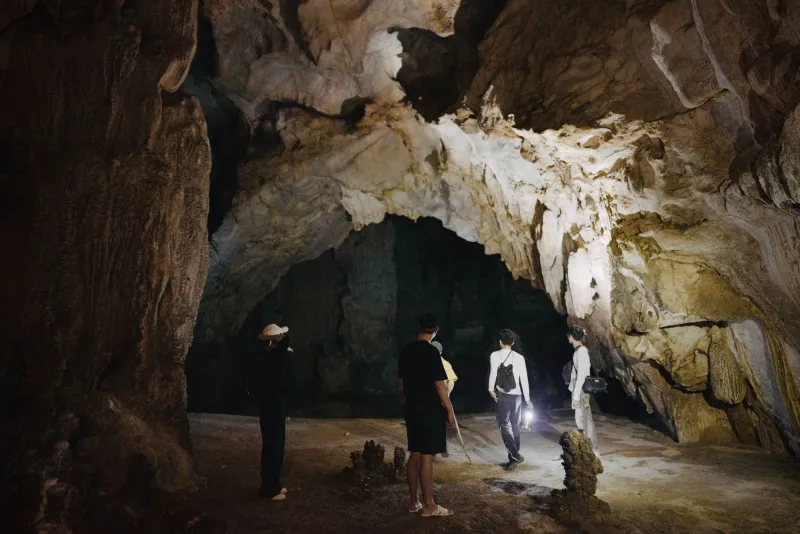
The entrance to a commercial show cave in the Appalachian highlands looks, from the outside, like a modest operation: a parking lot, a gift shop, a ticket booth staffed by a college student in a branded polo shirt. But beneath that unremarkable surface lies something that has taken nature tens of millions of years to construct—a system of passages, formations, and biological communities of extraordinary scientific value. Every day, guided tours move through those passages in carefully managed groups, flashlight beams sweeping across formations that a cave biologist might spend a career studying. The tension between those two realities—the cave as tourist attraction and the cave as scientific resource—is one of the defining fault lines in American speleology today.
It is a conflict without obvious villains. Commercial cave operators are, in most cases, genuinely invested in the preservation of the resource that sustains their business. Researchers are not, for the most part, hostile to public engagement with cave science. Conservation advocates recognize that economic value can be a powerful protection against more destructive land uses. Yet the practical management of America's cave systems increasingly forces these interests into direct competition, and the frameworks currently governing that competition are widely regarded as inadequate.
The Economic Argument
Commercial cave tourism in the United States is a substantial industry. The National Caves Association, which represents commercial cave operations across the country, counts more than 100 member caves attracting millions of visitors annually. Show caves—those developed for guided public tours—generate significant revenue for rural communities, many of which have limited alternative economic development options. In regions like the Ozarks, the Cumberland Plateau, and the karst country of central Texas, commercial caves are among the most visited natural attractions, drawing visitors who spend money on lodging, food, and related tourism activities well beyond the cave entrance fee itself.
This economic reality shapes the politics of cave management in ways that researchers often find frustrating. When a cave manager must choose between investing in improved visitor infrastructure and funding a scientific monitoring program, the calculus is rarely difficult. When a researcher requests access to a section of cave that is also a premium tour stop, the scheduling conflicts can be genuinely intractable. And when conservation recommendations would require limiting visitor numbers or closing certain passages to foot traffic, the economic consequences are concrete and immediate in ways that the scientific benefits are not.
"The economic pressure is not abstract," one cave manager in the mid-Atlantic region explained in a recent conversation with this publication. "When I have a tour group of forty people waiting and a researcher who wants to spend three hours collecting water samples in the same passage, I have to make a call. Most of the time, the tour goes first. That's the reality of how these operations function."
The Scientific Perspective
From the research community's vantage point, the consequences of that reality are accumulating. Cave systems that have been under intensive tourist use for decades show measurable degradation: elevated CO2 concentrations from visitor respiration, altered humidity regimes from ventilation modifications, lint and organic debris from clothing accumulating in passages, and physical damage to formations from inadvertent contact. These changes are not merely aesthetic. They alter the very conditions that make cave systems valuable as paleoclimate archives, biological habitats, and hydrological monitoring sites.
Researchers studying cave microbiomes—the complex communities of bacteria and fungi that inhabit cave surfaces and sediments—have documented significant contamination of microbial communities in heavily visited cave sections. Human skin bacteria, introduced through contact with cave walls and floors, can establish themselves in cave sediments and displace or mask native microbial populations that may be of considerable scientific or medical interest. Once introduced, these contaminants are effectively impossible to remove.
The access question is equally pressing. Many privately owned caves in the United States are closed to scientific research entirely, either because owners are unaware of their scientific value or because the liability and logistical complications of hosting researchers outweigh the perceived benefits. Even in caves where access is theoretically available, the terms under which researchers can work—time constraints, restrictions on sampling, requirements to coordinate with tour schedules—can make systematic scientific study difficult or impractical.
"There are cave systems in this country that we know, from geological and hydrological evidence, contain speleothem records of extraordinary scientific value," said one paleoclimatologist whose work focuses on the southeastern United States. "Some of those caves are commercial operations where the owners are cooperative but the practical constraints are severe. Others are simply inaccessible. The science that isn't being done because of access barriers is genuinely significant."
The Conservation Dilemma
Conservation advocates occupy an uncomfortable middle position in this debate. They share with researchers a commitment to protecting cave ecosystems from degradation, but they are also aware that commercial tourism, when properly managed, can be a powerful argument for cave preservation against more destructive alternatives. A cave that generates revenue as a tourist attraction is a cave that its owner has a financial incentive to protect. A cave that generates no revenue is potentially a cave that gets sold to a developer, quarried for limestone, or simply neglected.
The white-nose syndrome crisis, which has devastated North American bat populations since its arrival in the United States in 2006, illustrates the complexity of these trade-offs. The fungus responsible for the disease spreads partly through human movement between caves, and the scientific response has required significant restrictions on recreational caving access to hibernating bat populations. Commercial cave operations, which typically exclude bats from developed sections or manage bat populations separately from tour routes, have been less directly affected—but the crisis has heightened awareness of the ways in which human access to cave systems can have cascading ecological consequences.
Toward a More Functional Framework
Several models for managing these competing interests more effectively have emerged from discussions within the American speleological community. One approach, implemented in varying forms at a handful of cave systems, involves formal research partnership agreements between commercial operators and academic institutions—arrangements that give researchers scheduled, guaranteed access in exchange for scientific monitoring services that benefit the cave's management. At Luray Caverns in Virginia and several cave systems managed by the National Park Service, versions of this model have demonstrated that tourism and research need not be mutually exclusive.
Another approach involves the development of more rigorous visitor impact monitoring protocols, drawing on the substantial scientific literature on cave tourism ecology, to give managers better tools for identifying and responding to degradation before it becomes irreversible. Several cave research organizations have been working to make these protocols more accessible to small commercial operators who lack dedicated scientific staff.
What most observers agree on is that the current situation—characterized by ad hoc arrangements, inconsistent access, and insufficient monitoring—is not sustainable in the long run. America's cave systems are finite, fragile, and, in many respects, irreplaceable. The frameworks governing their use need to reflect that reality with considerably more rigor than they currently do. Whether the political and economic will exists to build those frameworks is a question that the speleological community is still, in the most literal sense, working through in the dark.