Life in the Dark: The Extraordinary Biological Communities Thriving Inside America's Cave Systems
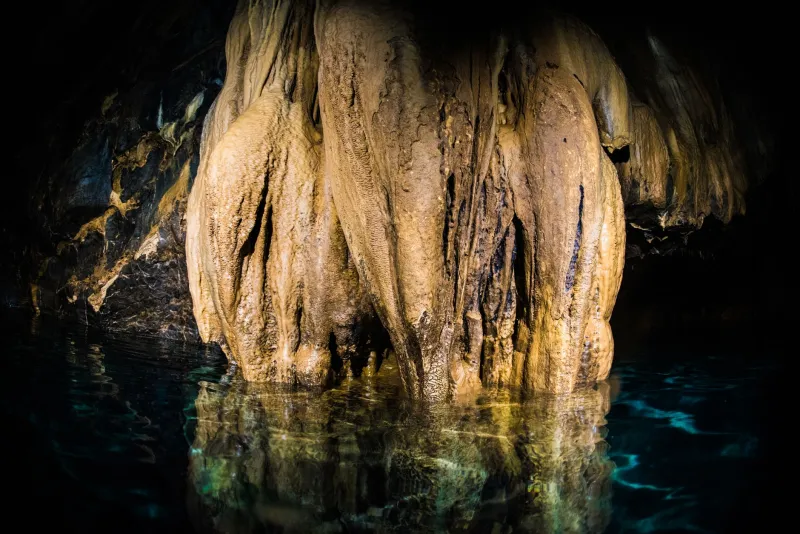
Most Americans are familiar with the concept of biodiversity hotspots — the Amazon rainforest, coral reefs, old-growth temperate forests. Far fewer recognize that some of the continent's most remarkable concentrations of unique life forms exist not in sunlit wilderness, but in the lightless interiors of American cave systems. These subterranean environments, sealed off from the surface for thousands or even millions of years, have become involuntary laboratories for evolution, producing organisms so specialized that they exist nowhere else on Earth.
What Is a Cave Ecosystem, Exactly?
Unlike surface habitats, cave ecosystems receive no direct solar energy. This fundamental constraint shapes everything. The food web must originate from somewhere other than photosynthesis, and in most cave environments, that energy source arrives in one of two ways: organic material washed in from the surface through cracks and sinkholes, or chemosynthesis — a process by which certain microorganisms derive energy from chemical reactions involving minerals in the rock itself.
The organisms that have adapted to exploit these scarce resources are broadly categorized by their degree of cave dependence. Trogloxenes are species that use caves temporarily but return to the surface — bats being the most familiar example. Troglophiles can complete their life cycles underground but are also found in surface environments. Troglobites, however, are the most scientifically compelling group: organisms that are entirely restricted to subterranean habitats, physiologically incapable of surviving outside them.
It is the troglobites that define the singular character of American cave ecosystems.
Evolutionary Isolation as a Biological Engine
When a surface population becomes isolated within a cave system — cut off by geological change, drought, or gradual habitat shift — it enters a distinct evolutionary trajectory. Over generations spanning thousands to millions of years, natural selection eliminates traits that are metabolically costly but no longer useful. Eyes, for instance, require significant energy to develop and maintain. In an environment of perpetual darkness, vision confers no advantage, and individuals with reduced ocular structures may actually conserve enough energy to outreproduce sighted counterparts.
The result is a recurring pattern of convergent evolution: unrelated cave species across the globe independently lose pigmentation, develop enlarged sensory appendages, slow their metabolic rates, and extend their lifespans compared to surface relatives. This pattern is so consistent and so well-documented in American cave fauna that caves have become model systems for studying the genetic basis of trait loss and phenotypic plasticity.
The Texas Blind Salamander and Other American Icons
Among the most celebrated examples of cave-adapted vertebrates in the United States is Eurycea rathbuni, the Texas Blind Salamander, found exclusively within the Edwards Aquifer system beneath the Texas Hill Country. Completely depigmented and entirely eyeless, this slender amphibian navigates the flooded limestone passages of its habitat using pressure-sensitive lateral line organs that detect minute water movements. Its legs are extraordinarily elongated relative to its body, an adaptation thought to assist movement through the water column in cave pools.
The Texas Blind Salamander is not alone. The Ozark cavefish (Amblyopsis rosae), the northern cavefish (Amblyopsis spelaea), and the Alabama cavefish (Speoplatyrhinus poulsoni) — the latter considered one of the rarest vertebrates in North America — represent a guild of independently evolved cave fish species scattered across the karst regions of the central and southeastern United States. Each occupies a discrete aquifer system, and each has followed a remarkably similar evolutionary path despite diverging from different surface ancestors.
Beyond vertebrates, American caves harbor hundreds of invertebrate troglobites: cave-adapted isopods, amphipods, beetles, and spiders, many of which were described by science only within the past few decades. New species continue to be formally documented each year, particularly in poorly explored systems across the Appalachians and the Ozarks.
Mammoth Cave: A Biodiversity Archive
Kentucky's Mammoth Cave system — the longest known cave system on Earth, with over 420 mapped miles of passages — has served as a focal point for cave biological research since the nineteenth century. Its sheer scale means that it encompasses multiple distinct ecological zones, from the twilight zone near its entrances, where surface-adapted species intermingle with cave specialists, to the deep aphotic zones where troglobitic communities exist in near-complete isolation.
Recent biological surveys within Mammoth Cave have documented the presence of microbial communities forming visible films and formations on cave walls and ceilings. Some of these microbial mats appear to be engaged in chemosynthetic processes, drawing energy from sulfur compounds and iron minerals in the surrounding limestone. Researchers from the National Park Service and collaborating universities have begun characterizing these communities using environmental DNA sequencing techniques, and preliminary findings suggest that the microbial diversity within Mammoth Cave may substantially exceed current estimates.
Fungal communities within the cave have also attracted significant scientific attention, particularly in the context of white-nose syndrome — a devastating fungal disease caused by Pseudogymnoascus destructans that has killed millions of North American bats since its detection in 2006. Understanding how native cave fungi interact with this introduced pathogen has become a research priority, and Mammoth Cave has served as a critical study site for tracking the disease's progression and the slow emergence of apparent resistance in some bat populations.
Wind Cave and the Chemosynthetic Frontier
South Dakota's Wind Cave, one of the oldest and most geologically complex cave systems in the world, presents a different biological profile. Known for its extraordinary abundance of boxwork — a rare speleothem formation found in few other caves globally — Wind Cave also contains microbial communities that appear to be sustained by chemosynthesis rather than surface-derived organic matter.
Studies conducted within Wind Cave have identified bacterial species capable of oxidizing manganese and iron compounds present in the cave's rock matrix. These organisms sit at the base of a simplified but functional food chain, supporting small communities of invertebrates that feed on microbial films. The implications of this finding are considerable: it suggests that certain cave ecosystems may be energetically self-sustaining over geological timescales, independent of surface conditions above.
This discovery carries relevance beyond speleology. Scientists studying the possibility of life in extreme environments on other planetary bodies — including the subsurface of Mars, where liquid water may persist in deep rock fractures — have cited chemosynthetic cave ecosystems as among the best terrestrial analogs available.
A Conservation Crisis Unfolding Underground
Despite their scientific significance, cave ecosystems in the United States face severe and escalating threats. Groundwater contamination from agricultural runoff, industrial discharge, and urban development infiltrates cave aquifers with alarming efficiency. Because cave species are often restricted to single aquifer systems, a localized contamination event can eliminate an entire species' global population.
Habitat disturbance from recreational caving, while generally well-managed in federally protected systems, remains a concern in the thousands of privately owned or unprotected caves across the country. Physical damage to cave formations and microbial communities can persist for centuries, given the slow pace of recovery in these environments.
The U.S. Fish and Wildlife Service currently lists dozens of cave-obligate species under the Endangered Species Act, and the number continues to grow as survey work expands. Conservation strategies increasingly focus on protecting surface recharge zones — the areas of land through which rainwater percolates into cave aquifers — as a means of safeguarding the subterranean habitats below without requiring direct access to the caves themselves.
The Ongoing Work of Discovery
For researchers affiliated with organizations like Speleos SIGA, American cave ecosystems represent one of the most compelling frontiers remaining in domestic biological science. The combination of evolutionary novelty, ecological complexity, and conservation urgency makes cave biology a discipline that rewards sustained investment and careful documentation.
New species descriptions, novel chemosynthetic pathways, and unexpected ecological interactions continue to emerge from ongoing survey work. Each discovery reinforces a central truth: the hidden world beneath our feet is neither static nor simple. It is dynamic, ancient, and irreplaceable — and it is only beginning to be understood.
