Beneath the Surface, Inside the Cell: What Cave Bacteria Are Teaching Scientists About the Future of Medicine
The global antibiotic resistance crisis has redirected scientific attention toward environments that were, until recently, considered peripheral to mainstream medicine. Coral reefs, deep-sea sediments, and ancient permafrost have all yielded microbial discoveries with potential clinical relevance. But one of the most consequential—and least publicly discussed—frontiers in this search is located directly beneath our feet, in the cave systems that honeycomb the American continent from the karst plains of Florida to the volcanic tubes of the Pacific Northwest.
Cave microbiology is not a new discipline, but it has matured rapidly over the past two decades, propelled by advances in genomic sequencing that allow researchers to characterize microbial communities without the need to culture individual organisms in a laboratory. What scientists are finding has simultaneously raised hopes for new drug discovery and prompted serious questions about the mechanisms by which antibiotic resistance develops and spreads in nature.
Isolation as an Evolutionary Engine
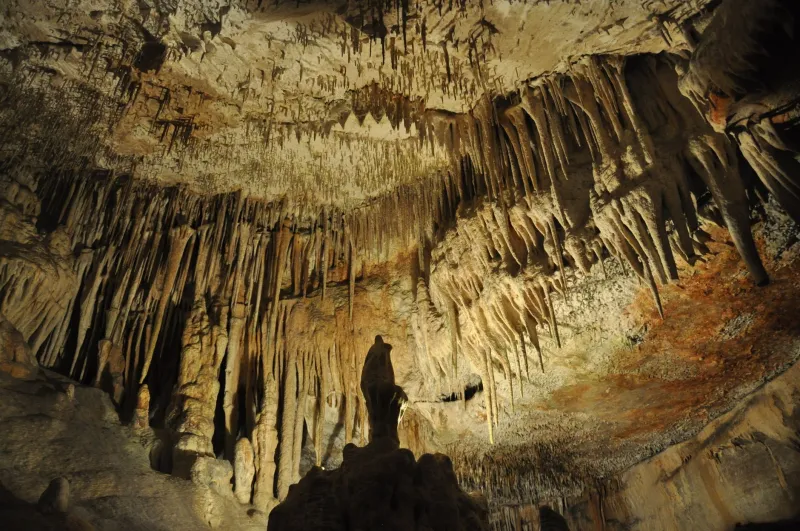
To understand why caves produce such unusual microbial communities, it is necessary to appreciate the conditions that define these environments. Most cave systems beyond their entrance zones receive no sunlight, maintain stable temperatures year-round, and are profoundly limited in the organic carbon that fuels most surface ecosystems. Bacteria that persist in these conditions have, over geological timescales, developed metabolic strategies and chemical defenses radically different from those of their surface counterparts.
Many cave bacteria are chemolithotrophs—organisms that derive energy not from organic matter but from the oxidation of inorganic compounds such as iron, sulfur, manganese, and ammonia. In doing so, they often produce biofilms and secondary metabolites that serve defensive or competitive functions within their microbial communities. It is among these secondary metabolites that researchers have identified compounds with antibiotic activity against human pathogens.
The isolation factor is critical. A bacterial population that has been physically separated from the surface world for tens of thousands—or in some cases, millions—of years has been subject to entirely different selective pressures than bacteria in soil, water, or the human gut. This divergence is precisely what makes cave microbiomes scientifically valuable: they represent evolutionary experiments conducted under conditions that do not exist anywhere else.
Lechuguilla Cave and the Resistance Paradox
The most widely cited study in the field of cave antibiotic resistance was published in 2012 by researchers at McMaster University, led by microbiologist Gerry Wright. The team collected bacterial samples from Lechuguilla Cave in New Mexico—a site that, as noted in prior Speleos SIGA coverage of cave mineralogy, has been restricted to permitted scientific access since its full extent was mapped in the late 1980s. Crucially, the cave had never been exposed to clinical antibiotics or significant human activity prior to its scientific exploration.
The results were striking. Bacterial isolates from Lechuguilla displayed resistance to multiple classes of antibiotics, including several compounds that were developed after the cave was sealed from surface influence. The organisms had not acquired these resistance mechanisms through exposure to medical or agricultural antibiotics. Instead, the resistance appeared to have evolved as a response to naturally occurring antimicrobial compounds produced by competing microorganisms within the cave environment—a phenomenon that underscores the ancient origins of antibiotic resistance as a biological strategy, long predating its emergence as a clinical problem.
This finding has significant implications for biosecurity and public health policy. If resistance mechanisms are a natural feature of microbial evolution rather than purely an artifact of antibiotic overuse, the timeline and scope of the resistance problem require reassessment. It does not diminish the urgency of addressing antibiotic misuse in medicine and agriculture, but it does suggest that resistance management strategies must account for a much deeper evolutionary landscape than previously recognized.
The Discovery Pipeline: From Cave Wall to Clinical Candidate
Beyond the resistance question, cave bacteria have attracted attention as potential sources of novel antimicrobial compounds. The logic is straightforward: organisms that have spent millions of years competing for scarce resources in enclosed environments have had strong selective incentives to develop potent chemical weapons. Some of the most important antibiotics in clinical use—including streptomycin and vancomycin—were originally derived from soil bacteria. Cave bacteria, which share evolutionary ancestry with soil microbes but have diverged substantially under different conditions, represent a largely untapped reservoir of chemical diversity.
Researchers at institutions including the University of New Mexico, Haverford College, and the United States Geological Survey have been systematically sampling bacterial communities from cave systems across the country. The work is painstaking: cave environments are fragile, and contamination from a researcher's own microbiome can compromise sample integrity. Protocols for sterile collection in confined underground passages require specialized training and equipment, and the subsequent genomic and biochemical analysis demands significant laboratory resources.
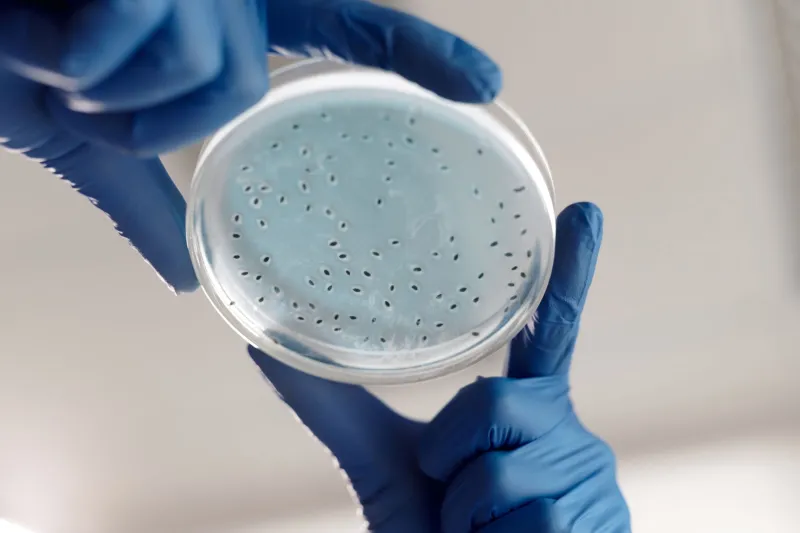
Among the more promising early findings, several bacterial strains isolated from caves in the Appalachian region have demonstrated activity against methicillin-resistant Staphylococcus aureus (MRSA) in laboratory assays. Others have shown efficacy against Clostridioides difficile, a pathogen responsible for severe gastrointestinal infections that disproportionately affect hospitalized patients. None of these candidates have yet entered clinical trials, and the attrition rate between initial discovery and approved drug is historically very high. Nevertheless, the pipeline is real, and it is expanding.
The Contamination Threat to Scientific Discovery
The same human activity that threatens cave mineralogy poses a parallel risk to cave microbiology. When visitors—whether tourists, recreational cavers, or inadequately trained researchers—introduce surface microorganisms into a cave environment, the resulting contamination can alter community composition in ways that are difficult or impossible to reverse. Fungal pathogens carried on clothing and equipment have already devastated cave-dwelling bat populations through white-nose syndrome; analogous disruptions to bacterial communities, though less visible, could similarly compromise the scientific value of cave microbiomes.
The introduction of Pseudogymnoascus destructans, the fungal pathogen responsible for white-nose syndrome, has prompted the speleological community to adopt increasingly rigorous decontamination protocols for all cave entry. These same protocols benefit microbial research by reducing the likelihood of surface contamination reaching sensitive underground environments. The convergence of conservation and scientific interests here is not incidental—protecting cave ecosystems and preserving their research value are, in most cases, the same objective pursued by different disciplines.
Toward a National Cave Microbiome Initiative
Despite the significance of the findings emerging from cave microbiology research, the field remains underfunded relative to its potential. Federal support through the National Institutes of Health and the National Science Foundation has been episodic rather than sustained, and the logistical challenges of cave sampling mean that many potentially significant sites have never been surveyed at all.
Some researchers have advocated for a coordinated national cave microbiome initiative, modeled in part on the Human Microbiome Project, that would systematically document bacterial diversity across geologically distinct cave systems before contamination or development compromises the data. Such an initiative would require collaboration between federal land management agencies, university research programs, and the broader speleological community—a coalition that is organizationally complex but not unprecedented.
The argument for urgency is not difficult to make. Every cave system that is damaged by uncontrolled visitation, altered by changes in hydrology, or compromised by surface contamination represents a potential loss of microbial diversity that may have taken millions of years to develop. In a period when antibiotic resistance threatens to reverse a century of medical progress, the organisms living in the dark beneath America's surface may hold some of the most consequential answers science has yet to find. The challenge is ensuring that the laboratories remain intact long enough to ask the right questions.