Acid and Stone: The Chemistry of Climate Change Inside America's Caves

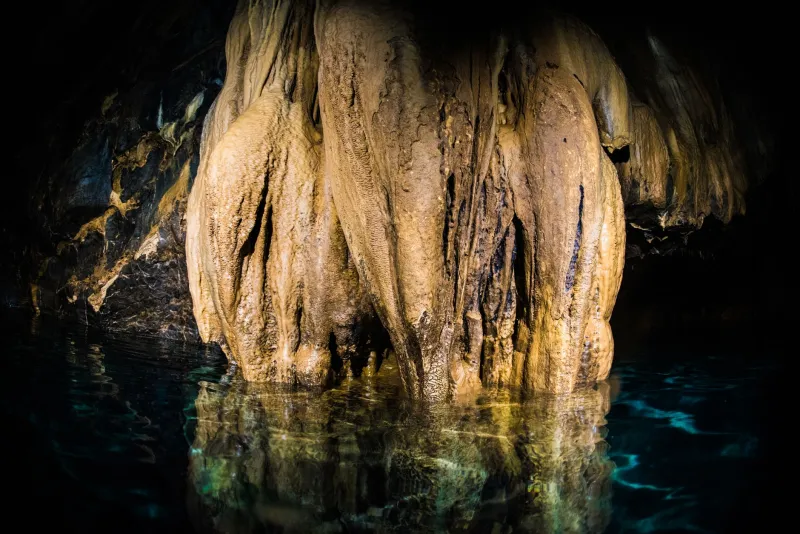
Photo by Photo by Krzysztof on Unsplash on Unsplash
Caves are not static features of the landscape. They are the visible expression of an ongoing chemical conversation between water, carbon dioxide, and limestone—a conversation that has been proceeding for millions of years and that responds, with remarkable sensitivity, to changes in the atmospheric conditions above. As CO2 concentrations in the Earth's atmosphere climb past levels not seen in at least three million years, that conversation is changing in ways that carry significant consequences for underground ecosystems, geological records, and the freshwater resources that millions of Americans depend upon.
Understanding those consequences requires a close examination of the chemistry involved—chemistry that is elegant in its simplicity but profound in its reach.
The Carbonic Acid Cycle: A Primer
The formation and dissolution of cave systems is governed primarily by a three-step chemical process. When atmospheric CO2 dissolves in rainwater or soil moisture, it forms carbonic acid (H₂CO₃), a weak but geologically potent acid. As this mildly acidic water percolates downward through soil and fractured bedrock, it encounters calcium carbonate—the primary mineral constituent of limestone. The acid dissolves the rock, releasing calcium and bicarbonate ions into solution. Over geological timescales, this dissolution process carves the passages, chambers, and conduits that constitute a cave system.
The process reverses when that calcium-bicarbonate-rich water enters an underground void. Exposed to the cave atmosphere, water releases CO2, shifting the chemical equilibrium and causing calcium carbonate to precipitate out of solution. This precipitation is the mechanism responsible for speleothems—stalactites, stalagmites, flowstone, and the extraordinary variety of mineral formations that characterize cave interiors.
Every step of this cycle is directly influenced by CO2 concentration. More atmospheric CO2 means more carbonic acid in percolating water, which means more aggressive dissolution of limestone above and within cave systems. Simultaneously, elevated CO2 in cave atmospheres—driven by increased soil respiration and altered ventilation dynamics—can suppress speleothem formation or alter the isotopic signatures recorded within growing formations.
What American Cave Research Is Revealing
Researchers monitoring cave systems across the United States have begun documenting changes consistent with these predicted chemical shifts. In the karst regions of the Ozark Plateau, long-term monitoring of cave stream chemistry has recorded gradual increases in dissolved calcium and bicarbonate concentrations—indicators of enhanced limestone dissolution rates. Similar trends have been observed in cave systems within the Interior Low Plateaus of Kentucky and Tennessee, where some of the nation's most extensive cave networks are concentrated.
In the Guadalupe Mountains of New Mexico and West Texas, where caves including Lechuguilla and Carlsbad Caverns developed through an unusual sulfuric acid dissolution process, researchers are examining how changing surface hydrology—itself partly a function of altered precipitation patterns linked to climate change—is modifying the chemical inputs to these systems. The relationship between surface climate and subterranean chemistry is not always linear, but the direction of influence is consistent.
Perhaps most significantly, studies of speleothem growth rates in caves across the American Southwest have identified measurable acceleration in some formations coinciding with periods of increased CO2 and altered moisture availability. While faster growth might seem unambiguously positive, the chemical composition of rapidly deposited speleothems differs from that of slowly accreted material—a distinction with important implications for the use of cave formations as paleoclimate proxies.
Disrupting the Archive
Speleothems are among the most valuable climate archives available to science. Because calcium carbonate incorporates oxygen isotopes from percolating water in ratios that reflect surface temperature and precipitation at the time of deposition, a single stalactite can contain a detailed record of regional climate spanning hundreds of thousands of years. This record has been used to reconstruct monsoon variability, glacial cycles, and drought patterns across North America with a precision unattainable from most other natural archives.
The integrity of that archive depends on conditions of relative chemical stability. When CO2-driven changes alter the rate or isotopic character of speleothem deposition, they introduce noise into the record—and potentially compromise the calibration frameworks that researchers use to interpret older portions of the same formation. Scientists at several American universities have flagged this concern in recent publications, noting that ongoing chemical shifts may eventually impair the reliability of future paleoclimate reconstructions from affected systems.
This is not merely an academic concern. Paleoclimate data derived from American cave systems has informed water resource planning, drought preparedness assessments, and ecological management across multiple western states. Degrading the quality of that data source has practical consequences that extend well beyond the research community.
Consequences for Cave Ecosystems
The biological communities that inhabit American caves are among the most specialized and vulnerable on Earth. Obligate cave-dwellers—organisms that have evolved in complete dependence on subterranean environments—are exquisitely adapted to the stable chemical and physical conditions that characterize undisturbed cave systems. Many possess no capacity to relocate or adapt rapidly to environmental change.
Shifts in cave water chemistry directly affect the invertebrate communities that form the base of subterranean food webs. Changes in pH, dissolved oxygen, and mineral ion concentrations can alter the availability of nutrient inputs, modify the microbial communities that many cave invertebrates depend upon, and stress physiological systems that evolved under conditions of remarkable constancy. In cave systems that also serve as critical habitat for threatened or endangered species—including several endemic crayfish, amphipods, and salamanders found only in specific American karst regions—these stressors represent a meaningful conservation concern.
The cave-adapted fauna of the Edwards Aquifer system in central Texas, for example, includes multiple federally listed species whose survival depends on the maintenance of specific water quality parameters within a geographically restricted habitat. Research conducted in collaboration with the U.S. Fish and Wildlife Service has identified water chemistry as a primary variable influencing population health in these communities, making CO2-driven chemical shifts a matter of regulatory as well as scientific interest.
Surface Water and the Aquifer Connection
Karst aquifers supply drinking water to an estimated forty million Americans, making the chemical dynamics of cave systems a public health issue as much as a scientific one. Enhanced limestone dissolution driven by elevated carbonic acid concentrations has the potential to alter aquifer porosity and permeability over time, modifying the flow paths and storage characteristics that determine how these systems respond to drought and recharge events.
In regions where karst aquifers are already under stress from agricultural withdrawals and population growth—the Hill Country of Texas, the karst valleys of Virginia and West Virginia, the limestone terrain of Florida—additional chemical perturbation introduces uncertainty into water supply projections that planners are only beginning to account for.
A System in Transition
The picture that emerges from current research is one of gradual but measurable transition. American cave systems are not on the verge of dramatic collapse, and the timescales involved in geological change remain long by human standards. But the direction of change is clear, the mechanisms are well understood, and the consequences—for biological communities, for scientific archives, and for surface water resources—are significant enough to warrant sustained attention.
For the researchers and institutions engaged in long-term cave monitoring, the priority is now to establish robust chemical baselines before further change obscures the original reference points. Understanding what is being lost requires first understanding, with precision, what currently exists.