The Cave Under Your Floorboards: A Karst Safety Guide for American Homeowners
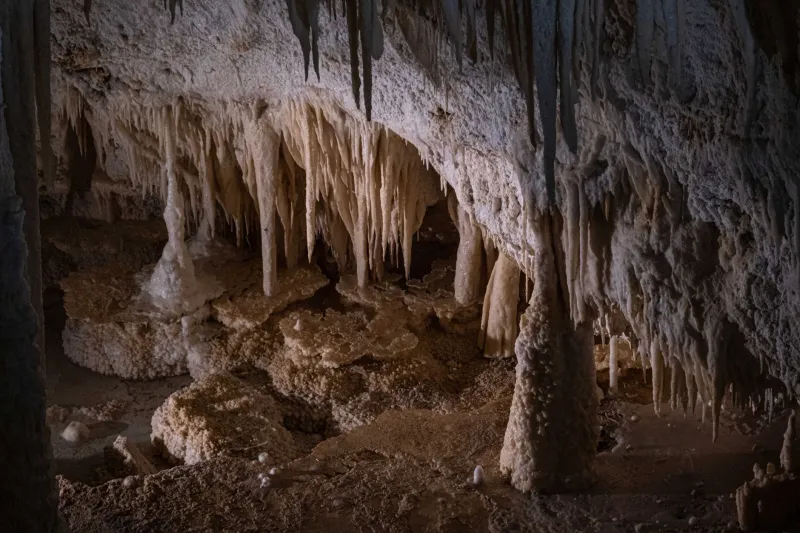
Every year, millions of Americans live above cave systems without knowing it. Not metaphorically — literally. In the karst regions that stretch from central Tennessee through Kentucky, Indiana, and the Ozarks, and along the marble belts of the Appalachians, the bedrock beneath suburban lawns is riddled with conduits, chambers, and sinking streams. The same chemistry that hollows out caverns also shapes what seeps into basements, what shifts beneath foundations, and what accumulates in the air of the lowest room of the house.
Radon: The Invisible Export of Fractured Rock
Radon is a radioactive gas produced by the decay of uranium-bearing minerals common in granite, shale, and phosphate deposits. In intact soil, it disperses harmlessly. In karst and fractured terrain, however, networks of solution channels and cave passages act like ventilation shafts in reverse — drawing soil gas upward into homes through foundation cracks, sump pits, and slab joints.
The Environmental Protection Agency estimates that radon causes roughly 21,000 lung cancer deaths annually in the United States, and the highest measured indoor concentrations frequently occur in counties with well-developed cave systems. Kentucky and Iowa routinely post some of the nation's worst test results.
The remedy is inexpensive and well established. Short-term test kits cost under $25; if levels exceed the EPA action point of 4 picocuries per liter, a contractor-installed sub-slab depressurization system — essentially a vent pipe and fan — typically resolves the problem for $800 to $2,500.
When the Ground Opens: Sinkhole Awareness
Cover-collapse sinkholes, in which soil bridges over an underlying void give way suddenly, are the most dramatic expression of karst hazards. Florida, which experienced thousands of reported sinkhole claims in the early 2010s, now mandates state-specific insurance provisions. Homeowners in Missouri, Alabama, and Pennsylvania face comparable exposure with less regulatory protection.
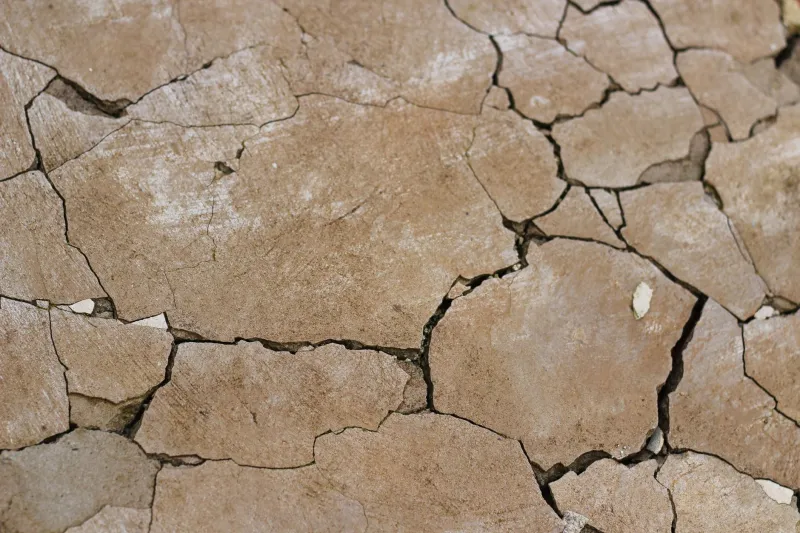
Warning signs worth taking seriously: newly forming ground cracks that grow in a circular pattern, doors and windows that begin sticking, fence posts or trees tilting inward, and ponding water where none previously collected. Geophysical surveys using electrical resistivity can map shallow voids before they surface, and county extension offices in karst states increasingly maintain sinkhole reporting databases.
Humidity, Rot, and the Basement as a Cave Annex
A house built into or beside karst terrain often inherits the cave's climate. Subterranean air holds steady near the mean annual temperature and approaches saturation humidity; when that air meets a cool basement wall, condensation follows. Persistent relative humidity above 60 percent supports mold growth, wood rot, and metal corrosion.
Speleologists reading a basement would recognize the diagnostic signs immediately: efflorescence (white mineral salts on masonry), dripping along the wall-floor junction, and a musty odor from microbial growth. The countermeasures are standard building science — dehumidification, exterior drainage correction, vapor barriers — but the underlying diagnosis is geological.
Know Your Ground
The first step for any homeowner is a five-minute check of the USGS karst map or state geological survey to determine whether the property sits on soluble rock. If it does, test for radon, review insurance coverage for ground movement, and learn the visual vocabulary of a developing sinkhole. The cave beneath the neighborhood will not announce itself — but with a little speleological literacy, it no longer has to surprise you.