Blind, Wingless, and Thriving: What Cave Insects Reveal About Evolution at Its Most Extreme
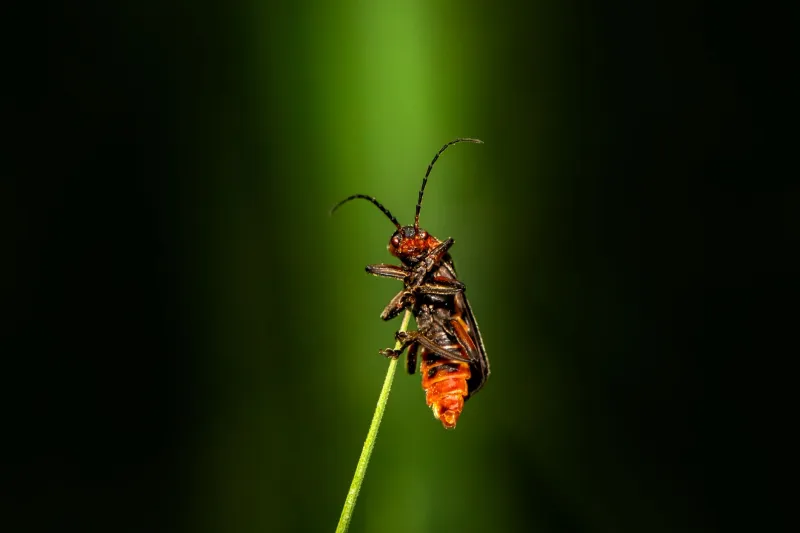
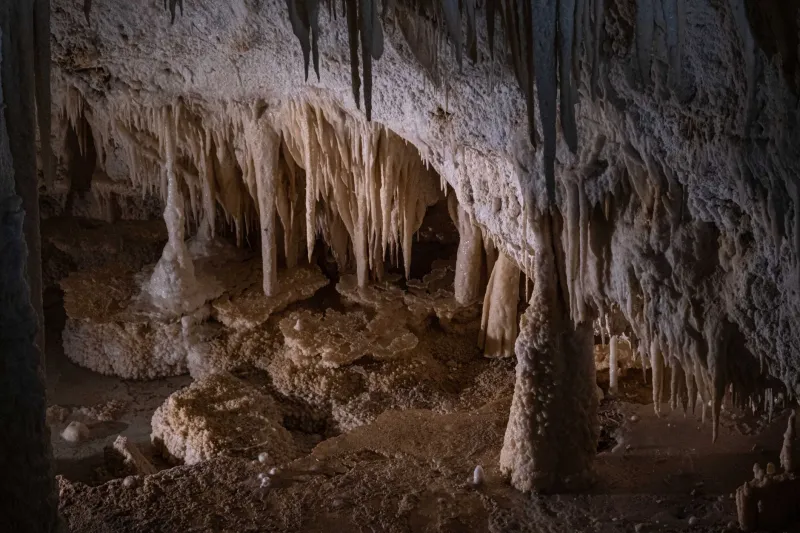
Somewhere beneath the hills of central Kentucky, in a passage that has not seen daylight in geological ages, a small beetle navigates absolute darkness with a precision that would humble a sighted creature. It has no eyes—not vestigial ones, not reduced ones, but no eyes at all. Its body carries no pigment. Its antennae, extraordinarily elongated, sweep the cave floor like finely calibrated instruments. It is, by almost every surface-world standard, a diminished animal. By the standards of evolutionary biology, it is something far more interesting.
Cave-dwelling insects have occupied the margins of biological research for generations, often treated as curiosities rather than central subjects. That is changing. A growing body of work emerging from American cave systems is repositioning these organisms—beetles, crickets, springtails, and others—as some of the most scientifically valuable subjects in the study of adaptation, speciation, and the genetic mechanics of trait loss. What they are revealing is both counterintuitive and, to researchers in the field, genuinely exciting.
The Anatomy of Adaptation
The suite of physical changes that define cave-adapted insects, collectively termed troglomorphism, follows a remarkably consistent pattern across unrelated lineages and geographically distant cave systems. Reduction or complete loss of eyes, depigmentation, elongation of sensory appendages, and metabolic slowdown appear repeatedly in species that share no common cave-dwelling ancestor. This convergence is itself a scientific puzzle.
Among the most studied examples in the United States is the cave beetle genus Ptomaphagus, several species of which inhabit the Mammoth Cave system in Kentucky—the longest known cave system on Earth, with more than 400 mapped miles of passage. These beetles exhibit complete anophthalmia, the total absence of eyes, yet demonstrate navigation and foraging capabilities that rival or exceed those of surface relatives. Researchers studying their sensory biology have documented extraordinary mechanosensory development: sensory hairs distributed across the exoskeleton that detect minute air pressure changes, effectively allowing the beetle to "see" its environment through touch and airflow.
In the cave systems of the Ozark Plateau—spanning Missouri, Arkansas, and Oklahoma—a distinct assemblage of cave-adapted crickets has drawn sustained scientific attention. Members of the genus Hadenoecus, commonly called cave crickets or camel crickets, present a somewhat different adaptive profile. While their eyes are reduced rather than absent, their legs have elongated dramatically, and their antennae can reach lengths several times their body size. These are not merely aesthetic differences; each modification reflects a functional response to a specific environmental pressure.
Regressive Evolution and the Genetics of Loss
For much of the twentieth century, the loss of eyes and pigment in cave organisms was explained primarily through neutral evolutionary theory—the argument that traits serving no function accumulate mutations and degrade over time simply because there is no selective pressure to maintain them. Under this model, blindness in cave insects was essentially passive: darkness made eyes useless, and useless structures eventually disappeared.
Recent genetic research has substantially complicated this picture. Studies on cave populations of the freshwater crustacean Asellus aquaticus and, more directly relevant, various cave-adapted beetle lineages have provided evidence that eye loss in some species is not merely neutral drift but actively selected. The metabolic cost of developing and maintaining complex visual structures appears significant enough that, in energy-limited cave environments, organisms investing fewer resources in eyes demonstrably outcompete those that do not. Eye loss, in this framework, is not passive decay—it is an active evolutionary advantage.
This distinction carries profound implications for how biologists model evolutionary change in isolated populations. The cave environment, stripped of the confounding variables that complicate surface-world studies, provides something approaching a controlled experiment. Populations that entered caves at different geological periods, or through different routes, can be compared directly. The degree of troglomorphic development often correlates with the estimated duration of cave isolation, offering researchers a rough evolutionary clock embedded in the organism's own body.
Speciation in the Dark
Perhaps the most theoretically significant contribution of cave insect research concerns the mechanisms of speciation itself. Classical models of species formation emphasize geographic separation followed by genetic divergence—populations split by mountains, rivers, or distance gradually accumulate enough genetic differences to become reproductively incompatible. Cave systems complicate this model in instructive ways.
Individual cave systems, or even distinct passages within a single system, can harbor populations of the same ancestral species at different stages of cave adaptation. In some Appalachian cave systems, researchers have documented populations of the same beetle species that entered different cave entrances, became isolated from one another, and are now diverging along parallel but not identical evolutionary trajectories. The caves are acting as simultaneous, independent evolutionary laboratories—running the same experiment with slight variations in starting conditions.
This phenomenon, sometimes described as parallel evolution in isolated subterranean populations, has significant implications for understanding how quickly speciation can proceed under intense selective pressure. Some cave-adapted insect populations show measurable genetic divergence from surface relatives within timeframes that, by geological standards, are remarkably brief. The cave environment appears to accelerate certain evolutionary processes, possibly because the combination of strong selection pressure, small population size, and high isolation creates conditions in which genetic change propagates rapidly.
Conservation and the Fragility of Ancient Experiments
The scientific value of these organisms is inseparable from their vulnerability. Cave insect populations are typically small, geographically restricted, and dependent on stable environmental conditions that have persisted, in some cases, for millions of years. A single cave system may harbor multiple endemic species found nowhere else on Earth—species that represent irreplaceable data points in the study of evolutionary biology.
In the United States, cave insects face threats from groundwater contamination, habitat disturbance associated with recreational caving, and the indirect effects of land-use changes above ground that alter water infiltration patterns and nutrient inputs into cave systems. The white-nose syndrome crisis affecting North American bat populations has also had cascading effects on cave insect communities, since bat guano represents a critical nutrient source for many cave invertebrates.
The scientific community's ability to study these organisms depends, in part, on their continued survival. That dependency has made cave biologists among the more vocal advocates for the conservation of intact subterranean habitats—not as a sentimental position, but as a straightforward prerequisite for ongoing research.
An Ongoing Experiment
What makes cave insects so scientifically compelling is precisely what makes them so easy to overlook: they are small, they live in inaccessible places, and they look, to the uninitiated eye, like diminished versions of more familiar creatures. The scientific reality is the inverse. These organisms are among the most precisely adapted animals on the continent, shaped by millions of years of selection in one of Earth's most demanding environments.
They are also, in a meaningful sense, still in process. Evolution does not pause, and the cave insects of America's subterranean systems are continuing to diverge, adapt, and speciate in real time. Every season of fieldwork produces new data, and every new genetic analysis refines the picture. The darkness beneath our feet, it turns out, is one of the most productive evolutionary laboratories on the planet.