Eight Legs in the Abyss: What Cave Spiders Reveal About the Assembly of Underground Life
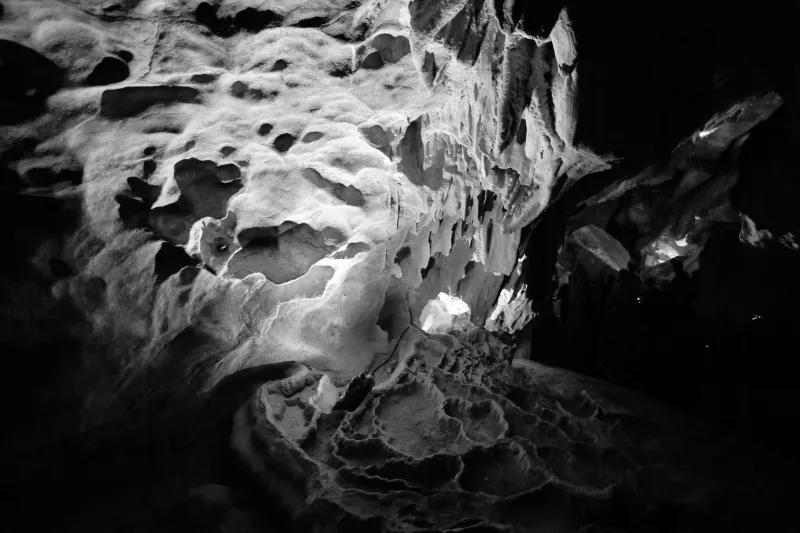
Deep inside the limestone corridors of the Ozark Plateau, where no photon of sunlight has penetrated in millennia, a pale, nearly translucent spider waits with extraordinary patience. It has no functional eyes. Its legs, elongated far beyond the proportions of its surface-dwelling relatives, stretch outward to detect the faintest vibration in the still air. It may not eat for weeks. When prey does arrive — a wandering cricket, a disoriented millipede — the encounter is swift and decisive.
This is Nesticus sp., one of dozens of spider species that have adapted, over thousands of generations, to life in North American cave systems. For arachnologists and cave biologists alike, these creatures represent far more than biological curiosities. They are windows into one of ecology's most fundamental questions: how does life organize itself in an environment defined by scarcity, isolation, and absolute darkness?
The Anatomy of Adaptation
The physical transformations that distinguish cave-adapted spiders — a condition scientists term troglomorphism — follow a pattern so consistent across unrelated lineages that researchers have long suspected the same selective pressures are at work regardless of geography or ancestry.
Eye reduction or complete loss is the most visually striking change, but arguably not the most functionally significant. In species such as Cicurina cave spiders, documented across Texas's Edwards Plateau, and the celebrated Meta species found in Appalachian caves, the investment in visual processing has been redirected toward sensory systems far more useful in darkness. Leg elongation increases the effective radius of vibration detection. Slit sensilla — microscopic sensory organs distributed across the exoskeleton — become more numerous and more sensitive, allowing spiders to interpret substrate vibrations with a precision that surface species rarely require.
Pigmentation loss, another hallmark of cave adaptation, is generally understood as a neutral consequence of relaxed selection rather than active adaptation. In the absence of ultraviolet radiation and predators that hunt by sight, the metabolic cost of producing melanin confers no benefit. Over sufficient generations, genes governing pigmentation accumulate mutations unchecked.
"What we are observing in cave spiders," notes Dr. Jean Krejca, a Texas-based arachnologist who has studied subterranean invertebrates across the American Southwest, "is essentially evolution running an experiment in slow motion. The cave environment strips away nearly every variable except pressure on sensory acuity and energy conservation. The result is convergent, predictable, and scientifically illuminating."
Genetic Clocks and Colonization Events
Recent advances in molecular phylogenetics have allowed researchers to move beyond morphological description and begin reconstructing the actual colonization histories of cave spider lineages. The findings have complicated — and enriched — earlier assumptions.
A 2021 study examining Nesticus cave spiders across the Appalachian region used mitochondrial and nuclear DNA markers to demonstrate that several morphologically similar cave populations had colonized subsurface environments independently, from genetically distinct surface ancestors. The implication is significant: the troglomorphic body plan is not the product of a single ancestral transition but rather a convergent solution that evolution has arrived at repeatedly, across different starting points and different timescales.
This phenomenon of parallel evolution is not unique to spiders — it has been documented in cave fish, cave amphipods, and cave beetles — but the resolution now available through genomic sequencing is providing unprecedented detail about the timing and mechanisms involved. Some Appalachian Nesticus populations appear to have been isolated in their cave systems since the Pleistocene, while others show colonization events far more recent. The genetic divergence between cave and surface populations of the same nominal species can, in some cases, rival the divergence between recognized species on the surface.
For researchers at institutions such as the Smithsonian's National Museum of Natural History, which maintains extensive collections of cave invertebrates, these findings are prompting systematic reexamination of existing specimens. Cave spider taxonomy, long considered a relatively settled field, is being substantially revised.
Predators as Ecosystem Engineers
Cave spiders do not exist in isolation from the broader biological communities around them. Their role as apex predators within many cave food webs — systems already constrained by the near-total absence of photosynthetic energy input — gives them an outsized influence on community structure.
In caves where organic material enters primarily through flooding events, bat guano deposition, or the slow percolation of surface detritus, energy is scarce and unevenly distributed. Spiders, capable of surviving extended periods without food, are uniquely positioned to exploit this intermittent resource landscape. Their webs, even in modified forms adapted to cave geometry, serve as passive capture devices that function continuously without metabolic expenditure.
Perhaps more consequentially, the presence of spider predation shapes the behavior and population dynamics of cave invertebrates at every trophic level below them. Crickets that venture too deep into cave systems, amphipods that stray from chemically rich stream margins, and dipteran larvae that emerge from organic deposits — all navigate a predation landscape partially defined by spider distribution and activity.
"Remove the spiders from a cave system and you would likely see cascading effects throughout the invertebrate community," observes Dr. Marshal Hedin of San Diego State University, whose laboratory has published extensively on the phylogeography of North American cave arachnids. "They are not passive inhabitants. They are structuring agents."
The Conservation Calculus
The same isolation that makes cave spiders scientifically invaluable renders them acutely vulnerable. Species restricted to single cave systems — and there are many such species across the karst landscapes of Texas, the Ozarks, and the southern Appalachians — face extinction risks that conventional conservation frameworks are poorly equipped to address.
Groundwater contamination from agricultural runoff, hydrological disruption caused by surface development, and the introduction of invasive surface species through cave entrances all represent documented threats to cave spider populations. The U.S. Fish and Wildlife Service currently lists several cave invertebrates under the Endangered Species Act, including arachnids endemic to the karst springs and caves of central Texas, where urban expansion around San Antonio and Austin has placed extraordinary pressure on subterranean habitats.
The scientific community has increasingly argued that cave spider conservation cannot be separated from watershed-scale land management. Because cave hydrology connects subsurface ecosystems to surface land use across sometimes vast geographic areas, protecting a cave entrance while allowing degradation of the surrounding karst catchment offers only partial protection at best.
A Model System for Macroecology
Beyond their intrinsic biological interest, cave spiders have emerged as a model system for addressing questions of broad relevance to ecology and evolutionary biology. The discrete, bounded nature of cave habitats — effectively islands of darkness within a matrix of surface landscape — makes them ideal for testing island biogeography theory, examining the relationship between isolation duration and genetic divergence, and investigating the repeatability of evolutionary outcomes.
As sequencing technologies continue to reduce in cost and increase in resolution, the pace of discovery in cave arachnology is accelerating. New species are being formally described from cave systems in the American Southeast at a rate that would have seemed implausible two decades ago. Each new description adds a data point to the larger picture of how life finds its footing in the dark.
The pale spider in the Ozark limestone is, in this sense, not merely a survivor. It is a record — written in protein and behavior and the slow grammar of evolutionary time — of how ecosystems are built from almost nothing, one adaptation at a time.