Geology of Freedom: How Speleological Research Is Illuminating the Cave Refuges of the Underground Railroad
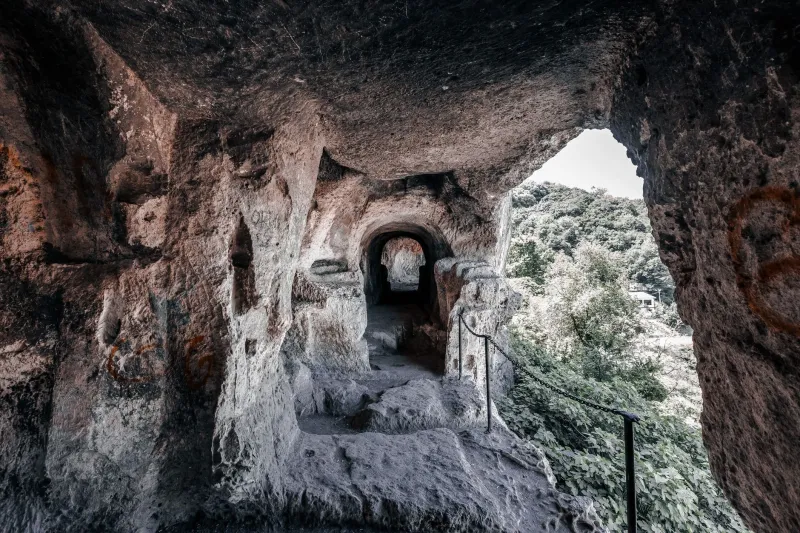
The phrase "Underground Railroad" has long functioned as metaphor — a coded language of movement, concealment, and solidarity. Yet for a significant number of freedom seekers in nineteenth-century America, the underground was not merely figurative. Limestone caverns, sinkholes, and natural passages carved by millennia of karst processes provided literal shelter to men, women, and children making some of the most consequential journeys in American history. Today, a growing collaboration between speleologists, historians, and archaeologists is beginning to recover the physical evidence of that hidden geography.
The Karst Corridor and Its Strategic Significance
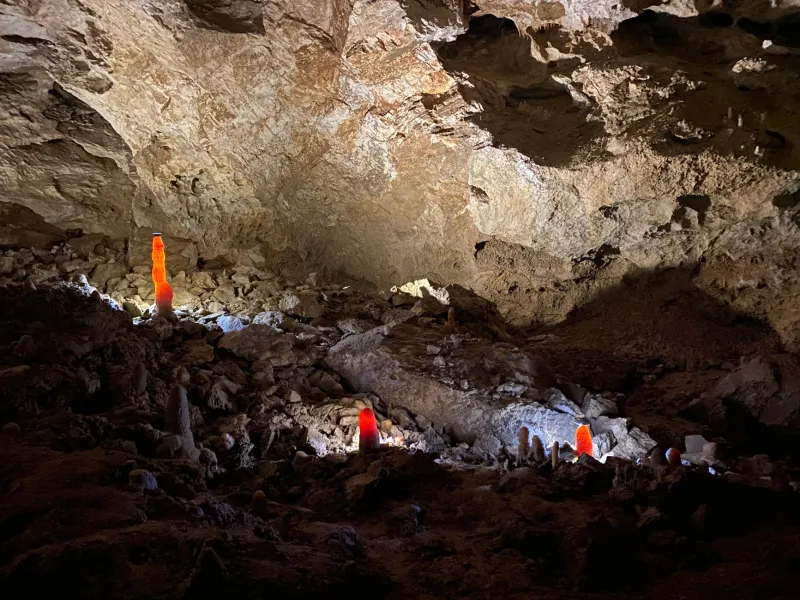
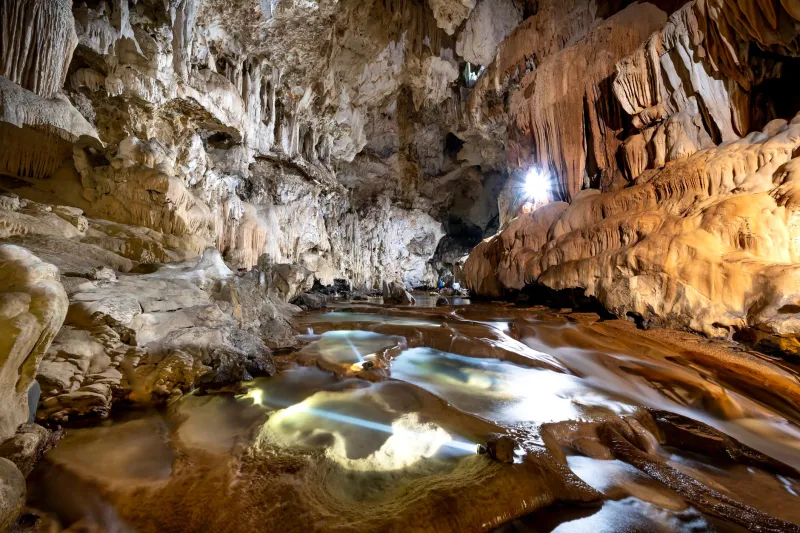
The geology of the eastern and central United States created conditions that were, in many respects, ideally suited to concealment. The Appalachian Valley and Ridge province, the Interior Low Plateaus of Kentucky and Tennessee, and the Ozark highlands of Missouri and Arkansas all sit atop extensive karst terrain — landscapes shaped by the slow dissolution of soluble bedrock, primarily limestone and dolomite, by slightly acidic groundwater. The result is a subsurface architecture of chambers, passages, and sinkholes that, in some regions, rivals the complexity of any built infrastructure.
For freedom seekers navigating by night and sheltering by day, this terrain offered specific and documented advantages. Caves maintained a relatively stable internal temperature year-round — typically between 50 and 60 degrees Fahrenheit across much of the mid-Atlantic and border state regions — providing thermal refuge during winter crossings. Their interiors muffled sound. Their entrances, frequently obscured by dense riparian vegetation or collapsed sinkhole margins, were difficult to locate without prior knowledge. These were not incidental benefits; oral histories and abolitionist accounts from the period suggest that knowledge of specific cave locations was deliberately transmitted along freedom networks.
What the Archaeological Record Reveals
Documenting cave use along the Underground Railroad presents methodological challenges that are, in many ways, unique to the subterranean environment. The preservation conditions inside caves are highly variable. Organic materials — cloth, food remnants, wooden implements — may survive for centuries in dry, stable passages, or decompose within decades in wetter, more active systems. Soot deposits from candles or torches can adhere to cave walls and ceilings for extraordinarily long periods, and in several documented cases, researchers have identified carbonaceous residues in historically significant cave systems that are consistent with nineteenth-century occupation.
At Mammoth Cave in Kentucky — the world's longest known cave system and a site with extensively documented antebellum history — researchers have long noted evidence of human activity extending well beyond the cave's formal tourist and saltpeter mining operations. The cave's enslaved guides, most notably Stephen Bishop, possessed an intimate knowledge of its passages that far exceeded what any official record captured. Speleologists revisiting sections of the cave's more remote corridors have documented artifact scatters and surface disturbances that invite careful archaeological investigation.
Similar work is underway in the Shenandoah Valley of Virginia and West Virginia, a region where limestone geology and a dense network of freedom routes intersected. Local historical societies, working in partnership with cave research organizations, have begun systematic surveys of cave entrances along documented escape corridors, applying ground-penetrating radar, LiDAR terrain analysis, and sediment coring to identify subsurface features that surface inspection alone cannot reveal.
The Hydrogeological Logic of Escape Routes
One of the more significant contributions that speleological science is making to Underground Railroad research lies in understanding how freedom seekers likely navigated karst terrain. Springs emerging from cave systems — known as karst springs or resurgences — frequently served as landmarks and water sources. In an era before GPS or reliable cartography for those traveling covertly, the hydrological features of karst landscapes provided a navigational framework. Streams that disappeared underground at swallow holes and reemerged miles away at valley-floor springs created natural waypoints that someone with local geological knowledge could reliably follow.
Researchers at several institutions are now applying hydrological tracing techniques — methods developed for contemporary groundwater studies — retrospectively, to reconstruct the likely surface and near-surface routes that would have been passable and strategically advantageous during the antebellum period. This work requires integrating historical land-use data, nineteenth-century survey maps, and modern subsurface geological models, a methodological synthesis that reflects the increasingly interdisciplinary character of cave science.
Oral History, Community Knowledge, and the Limits of the Written Record
Perhaps the most important corrective that this research offers is a reminder of how much the documented history of the Underground Railroad systematically underrepresents the knowledge systems of the people who built and used it. Freedom seekers and their allies deliberately left few written records. The geological knowledge embedded in oral traditions — which caves provided reliable shelter, which passages connected to which surface features, which springs could be trusted — was transmitted through networks that had every reason to remain invisible to the archival record.
Descendant communities in Kentucky, Tennessee, Ohio, and across the mid-Atlantic states have preserved oral accounts that are now being cross-referenced with speleological survey data. In several instances, community-held knowledge of specific cave locations has directed researchers to sites that no formal historical record had identified. This convergence of geological fieldwork and community memory represents one of the more promising methodological developments in the field.
The Scientific and Ethical Dimensions of This Work
Cave sites associated with the Underground Railroad occupy a complex position in the landscape of heritage preservation. They are, simultaneously, geological features subject to scientific study, archaeological sites requiring careful excavation protocols, and places of profound historical and cultural significance to African American communities whose ancestors risked everything within their walls. Responsible research in these environments demands not only technical rigor but sustained engagement with descendant communities and a commitment to interpretive frameworks that center the experiences of freedom seekers rather than treating caves merely as geological curiosities.
Speleological organizations working in this space have increasingly adopted community-partnership models, ensuring that research priorities, publication decisions, and site management questions are shaped by the communities with the deepest stake in what these caves represent.
The limestone formations that sheltered freedom seekers were shaped over hundreds of millions of years by forces entirely indifferent to human history. That they became, for a critical period in American life, instruments of survival and resistance is a testament to the ingenuity of those who read the landscape carefully and used what the earth provided. Recovering that story — through geological analysis, archaeological fieldwork, and the preservation of living memory — is among the more consequential tasks that American cave science has undertaken.