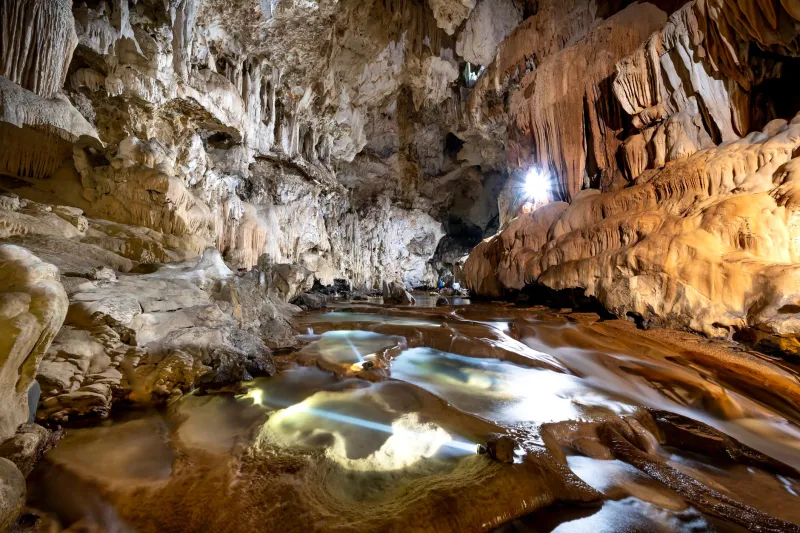
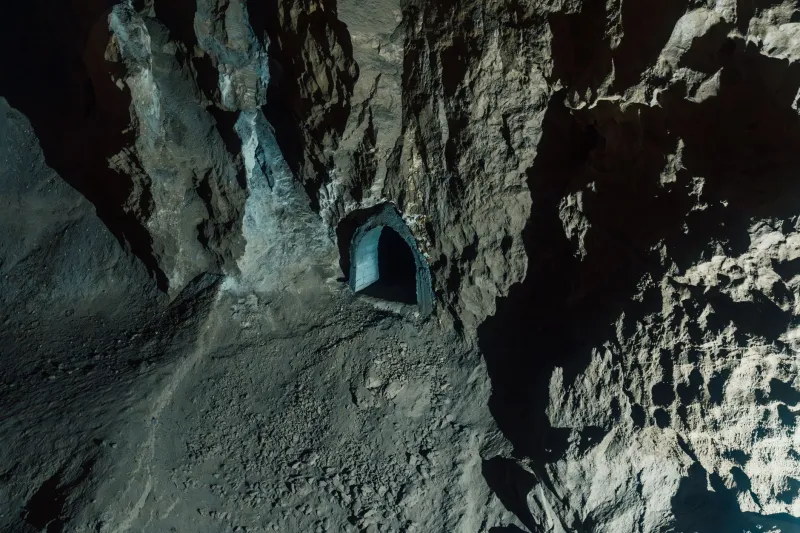
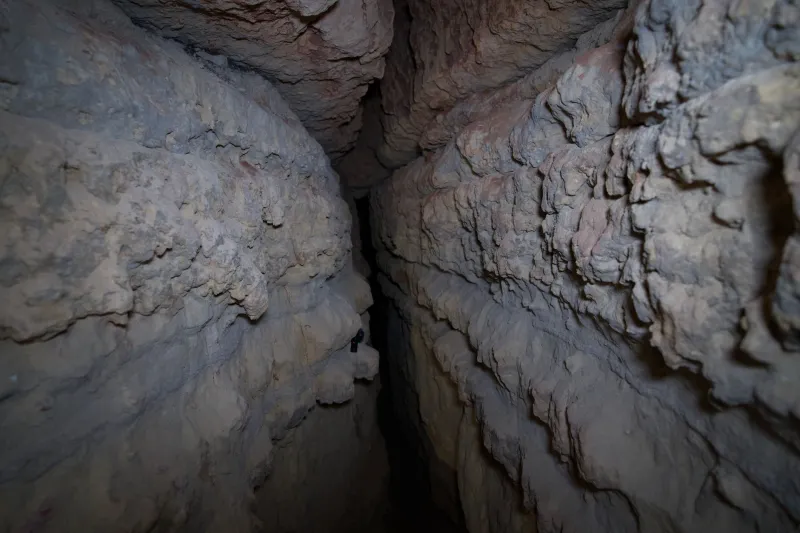
Darkness as a Laboratory: How Cave Fungi May Offer New Weapons in the Fight Against Antibiotic Resistance
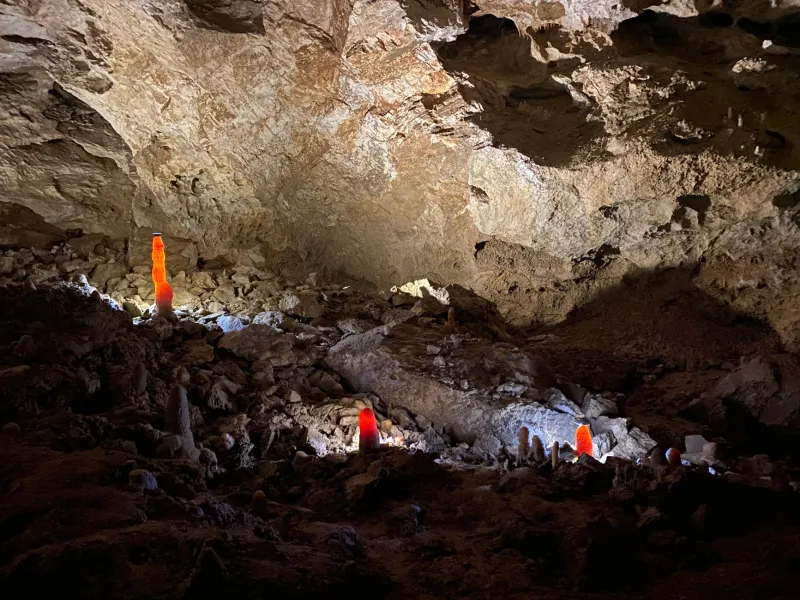
For decades, the pharmaceutical industry's search for new antibiotics has focused largely on soil bacteria, tropical rainforests, and marine sediments. Yet one of Earth's most chemically diverse and chronically underexplored environments sits not across an ocean but directly beneath our feet. Deep within the cave systems of the Appalachian Mountains, the Ozark Plateau, and the limestone karst regions of the American Southwest, fungi have spent millennia adapting to conditions of total darkness, extreme nutrient scarcity, and biological isolation. The compounds these organisms have developed to survive — and to compete — may represent a largely untapped reservoir of antimicrobial potential.
The field of cave mycology remains young, but its implications are drawing serious attention from both the speleological research community and the broader life sciences.
What Makes Cave Fungi Scientifically Distinct
Fungi found in subterranean environments differ from their surface counterparts in ways that go far beyond the absence of light. In cave ecosystems, nutrient availability is severely limited. Organic matter enters primarily through water infiltration, bat guano, or the occasional carcass of an animal that wandered too deep. In this context, competition for resources is fierce, even if slow-moving by surface standards.
To survive these pressures, cave-adapted fungi — many of which are classified as extremophiles — have developed highly specialized metabolic pathways. Among the most scientifically interesting byproducts of these pathways are secondary metabolites: chemical compounds that serve no direct role in the organism's core biological functions but provide competitive or defensive advantages in the environment. On the surface, analogous compounds produced by fungi and bacteria gave scientists penicillin, streptomycin, and dozens of other foundational antibiotics. In cave systems, the evolutionary pressures driving secondary metabolite production have operated in isolation from those surface ecosystems for thousands of generations.
This isolation is precisely what makes cave fungi so promising. Species that have never been exposed to modern agricultural chemicals, industrial pollutants, or human-introduced pathogens may produce compounds with entirely novel molecular structures — structures that existing resistant bacteria have never encountered and have no evolved defense against.
The Resistance Crisis and Why Novel Sources Matter
The urgency behind cave mycology research is difficult to overstate. The Centers for Disease Control and Prevention estimates that antimicrobial-resistant infections cause more than 35,000 deaths annually in the United States alone, with global projections far grimmer. The pipeline of new antibiotic classes approved by the Food and Drug Administration has slowed to a trickle over the past three decades, largely because the environments that yielded earlier discoveries have been extensively sampled and have returned diminishing results.
Pharmaceutical researchers increasingly acknowledge that finding genuinely novel antibiotic scaffolds — molecular frameworks unlike those already in clinical use — requires looking in places that have not yet been systematically examined. Cave ecosystems, particularly deep zones with little or no connection to surface environments, qualify as among the least-examined biological habitats on Earth.
Several research teams associated with American universities have already begun preliminary screenings of cave-derived fungal isolates, with results that justify expanded investigation. Strains collected from caves in Kentucky, Virginia, and New Mexico have demonstrated measurable inhibitory activity against both gram-positive and gram-negative bacterial cultures in laboratory settings, including strains of Staphylococcus aureus and Pseudomonas aeruginosa that have demonstrated resistance to multiple conventional antibiotics.
Methodology: Where Speleology Meets the Microscope
The process of identifying and collecting cave fungi for pharmaceutical research requires a degree of interdisciplinary coordination that has historically been difficult to sustain. Mycologists need access to cave environments, but collection must be conducted with rigorous attention to contamination protocols and conservation ethics. Speleological organizations play a central role in facilitating this access responsibly.
Field collection typically involves swabbing cave surfaces — walls, ceiling formations, sediment deposits, and the surfaces of speleothems — using sterile materials that are then transported under controlled conditions to laboratory facilities. The challenge is not simply collecting material but ensuring that organisms collected from environments with near-zero nutrient availability can be cultured in laboratory settings, where they often behave unpredictably. Many cave-adapted fungi grow extraordinarily slowly and require specialized growth media that approximate the chemical conditions of their native habitat.
Once cultures are established, researchers subject them to bioassay screening: exposing fungal extracts to panels of bacterial and fungal pathogens to identify which isolates show antimicrobial activity. Promising candidates then undergo chemical analysis to identify the specific compounds responsible for observed effects, a process that can take months or years before yielding a compound suitable for further development.
Advances in genomic sequencing have accelerated this pipeline considerably. Environmental DNA analysis — sometimes called eDNA or metagenomics — now allows researchers to identify fungal species and predict their biosynthetic gene clusters without culturing the organisms at all. Gene clusters associated with the production of known antibiotic classes can be identified, but more importantly, novel clusters with no known analogs can be flagged for targeted investigation.
Conservation and the Ethics of Subterranean Sampling
The prospect of mining cave ecosystems for pharmaceutical compounds raises legitimate conservation concerns that the speleological community takes seriously. Cave fungi, like all cave-adapted organisms, exist within fragile ecological networks. Aggressive or poorly managed collection could disrupt these systems in ways that are difficult or impossible to reverse.
Responsible cave mycology research adheres to principles of minimal disturbance. Collection quantities are kept as small as possible, sampling locations are carefully documented, and researchers work closely with land management agencies — including the National Park Service and Bureau of Land Management — to ensure that sampling occurs within permitted frameworks. In many cases, eDNA approaches reduce or eliminate the need for physical sample collection entirely.
There is also a longer-term conservation argument embedded in this research: demonstrating that cave ecosystems have quantifiable pharmaceutical value may strengthen the case for their protection in policy contexts where ecological arguments alone have failed to persuade.
A Frontier That Demands Systematic Attention
The United States contains thousands of documented cave systems, with an unknown but certainly substantial number remaining unmapped or incompletely explored. Each of these systems represents a distinct biological community shaped by its own geological history, hydrology, and degree of surface connectivity. The fungal diversity across these environments is correspondingly vast — and the overwhelming majority of it has never been examined through a mycological lens.
For the speleological research community, cave mycology represents an opportunity to demonstrate the practical, immediate value of subterranean science to a public that often perceives cave exploration as a niche recreational activity. The connection between cave research and antibiotic discovery is not speculative; it is grounded in established biological principles and supported by early laboratory findings that warrant serious investment.
The organisms living in America's underground darkness have been conducting their own chemical experiments for far longer than human science has existed. Listening carefully to what those experiments have produced may prove to be one of the more consequential decisions the biomedical research community makes in the coming decade.