Listening to the Dark: How Acoustic Technology Is Opening New Frontiers in Cave Research
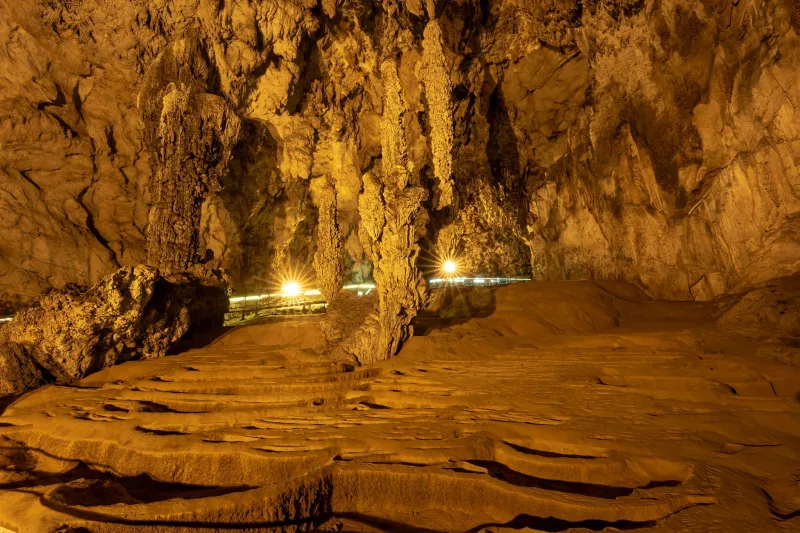
For most of the history of speleology, understanding what lies beneath the earth has required direct human presence. Researchers squeezed through narrow passages, waded through subterranean streams, and pressed recording equipment against cave walls—often disturbing the very ecosystems they sought to study. Today, a growing number of scientists are pursuing a fundamentally different approach. By deploying arrays of acoustic sensors inside cave systems across the United States, they are gathering data of unprecedented richness while leaving the environment largely undisturbed.
The discipline of bioacoustics—the study of sound production, transmission, and reception in living organisms—has long been applied to surface environments, from rainforest canopies to ocean floors. Its migration into cave research, however, represents a relatively recent and rapidly accelerating development. What researchers are learning from the sounds of silence—and from the extraordinary range of sounds that actually fill that silence—is reshaping foundational assumptions about underground ecosystems.
The Acoustic Landscape of an American Cave
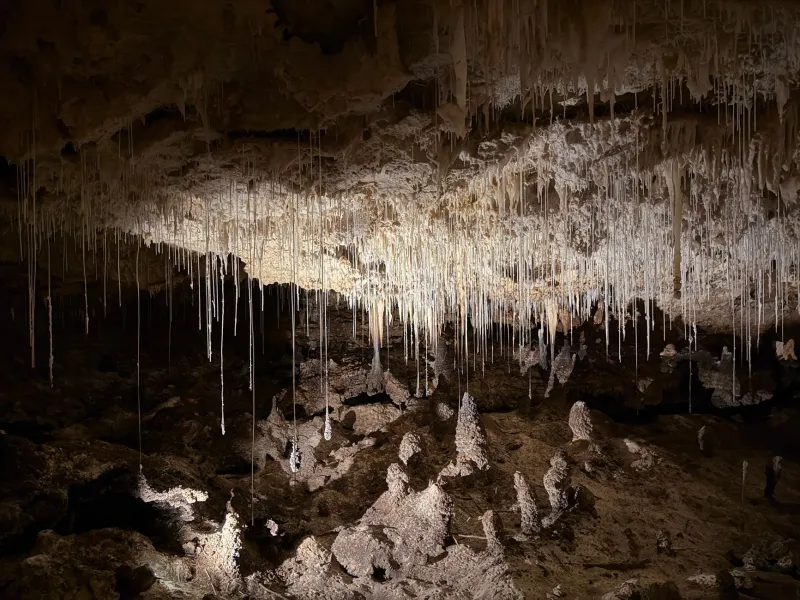
Caves are not quiet places. To the unaided human ear they may seem so, but the acoustic environment within a well-developed cave system is remarkably complex. Bat colonies generate overlapping ultrasonic signals during echolocation. Dripping water produces low-frequency pulses that travel considerable distances through both air and rock. Subterranean streams create broadband noise signatures that vary with flow rate. Even the slow movement of sediment along a cave floor generates detectable vibrations.
Sensors capable of capturing this full acoustic spectrum—from infrasound frequencies below the range of human hearing to ultrasonic frequencies above it—can be installed at cave entrances or transported to interior locations during a single research visit, then left to operate autonomously for weeks or months. The data they collect can subsequently be retrieved without requiring researchers to re-enter sensitive zones.
In systems such as Mammoth Cave in Kentucky, the longest known cave system in the world, and the extensive karst networks of the Ozark Plateau, acoustic monitoring programs have already demonstrated their value. Researchers working in these environments have used sustained passive recording to track bat population dynamics across entire hibernation seasons—a task that would previously have required repeated physical surveys, each one carrying the risk of disturbing hibernating animals and triggering potentially fatal arousal events.
Mapping Passages Without a Flashlight
Beyond wildlife monitoring, acoustic technology is being applied to one of speleology's oldest and most labor-intensive challenges: mapping cave passages that are physically inaccessible to humans.
Active acoustic methods—in which researchers introduce a controlled sound source and analyze how the resulting waves propagate, reflect, and attenuate through the surrounding medium—can reveal the presence of voids, passages, and chambers that no human eye has seen. The principle is analogous to medical ultrasound imaging, and the practical applications are similarly transformative.
In several karst regions of the southern Appalachians, geologists have used ground-penetrating acoustic surveys to identify previously unknown cave passages running beneath protected land. Some of these passages are too narrow for human entry. Others are submerged. Still others lie at depths that make physical exploration prohibitively dangerous. Acoustic profiling allows researchers to characterize the geometry of these spaces, estimate their volume, and assess their likely hydrological function—all without disturbing the formations, sediments, or organisms they contain.
The technology is also being applied in reverse: sensors placed inside known cave passages can detect acoustic signatures propagating inward from the surrounding rock matrix, helping geologists identify zones of structural instability or incipient collapse. This application carries significant implications for the safety of cave explorers and for the management of cave systems located beneath developed land.
Tracking Geological Change in Real Time
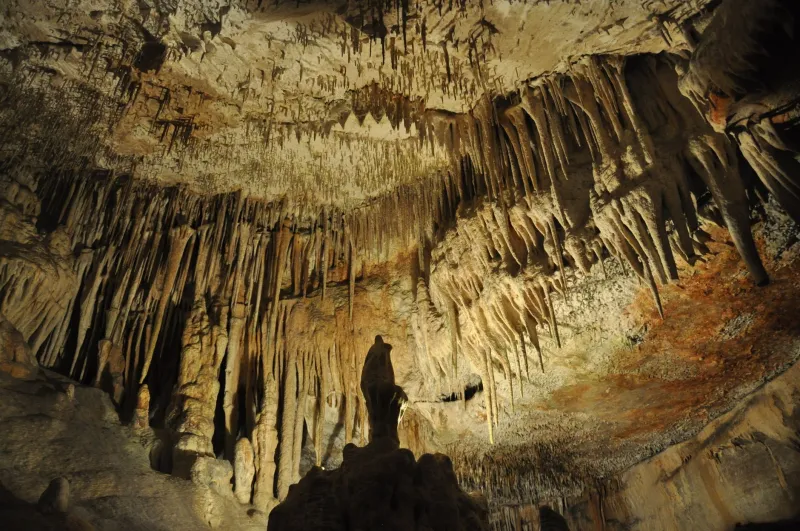
One of the most consequential applications of acoustic monitoring in cave research involves the detection of geological change as it occurs. Cave systems are dynamic environments. Speleothems grow, albeit slowly. Passages shift in response to seismic activity. Floodwaters deposit and erode sediment. These processes unfold across timescales that range from milliseconds to millennia, and capturing them with any fidelity has historically required either extraordinary luck or extraordinary patience.
Permanently installed acoustic sensor networks are changing that equation. By maintaining continuous recording over extended periods, researchers can identify anomalous acoustic events—a microcrack propagating through a stalagmite, a ceiling block shifting by a fraction of a millimeter, a surge in subterranean stream discharge—and correlate them with external environmental variables such as rainfall, temperature, or seismic activity.
Researchers affiliated with several American university cave research programs have begun publishing results from multi-year acoustic monitoring deployments that document, with granular precision, how specific cave formations respond to surface weather events. The findings are not merely academically interesting. They are directly relevant to questions of cave stability, groundwater management, and the long-term preservation of speleothem records that serve as climate archives.
The Conservation Dimension
Perhaps the most urgent motivation for the expansion of acoustic monitoring programs is conservation. Many of the cave systems in the United States support biological communities of extraordinary rarity and fragility. Species endemic to a single cave or cave system—blind crayfish, depigmented salamanders, highly specialized invertebrates—exist in population sizes so small that even modest human disturbance can have measurable demographic consequences.
The white-nose syndrome crisis, which has devastated North American bat populations since the fungal pathogen Pseudogymnoascus destructans was first documented in New York State in 2006, has given particular urgency to the development of non-invasive monitoring methods. Acoustic sensors capable of identifying individual bat species by their echolocation calls—and in some cases distinguishing individual animals by subtle call characteristics—offer researchers a means of tracking population recovery or decline without requiring entry into hibernacula during the winter months when bats are most vulnerable.
This is not a marginal improvement over existing methods. It is a categorical advance. The ability to monitor bat populations continuously, across full seasonal cycles, without the physiological stress that human intrusion imposes on hibernating animals, represents exactly the kind of methodological refinement that conservation science requires as it confronts the scale and urgency of current biodiversity loss.
A Science Transformed
Speleology has always been defined, in part, by the willingness of its practitioners to go where others will not—into darkness, into confinement, into environments that demand both physical courage and technical skill. That tradition retains its importance. There are questions that only direct observation can answer, and there are places where no sensor can substitute for a trained human researcher.
But the integration of acoustic monitoring into standard speleological practice is expanding the discipline's reach in ways that physical exploration alone cannot match. Caves that no human will ever enter are now yielding data. Populations of rare species are being tracked without disturbance. Geological processes are being observed in real time. And the methodological foundations of cave science are being rebuilt around a principle that is increasingly central to ecological research across every domain: the most important thing a researcher can sometimes do is listen, quietly, without interfering.
For a discipline devoted to exploring hidden worlds, that is a significant reorientation. The sounds of those worlds, it turns out, have a great deal to say.