Ancient Air, Preserved in Stone: How Cave Formations Are Unlocking Earth's Atmospheric Past
The atmosphere leaves no fossils. Unlike bones, pollen, or sediment layers, the gases that have surrounded our planet throughout its history are transient by nature—mixing, reacting, and dispersing across geological time without leaving obvious physical traces. Or so it was long assumed. Research emerging from cave systems across the United States and internationally is overturning that assumption in ways that are generating considerable excitement among paleoclimatologists, atmospheric chemists, and geologists alike.
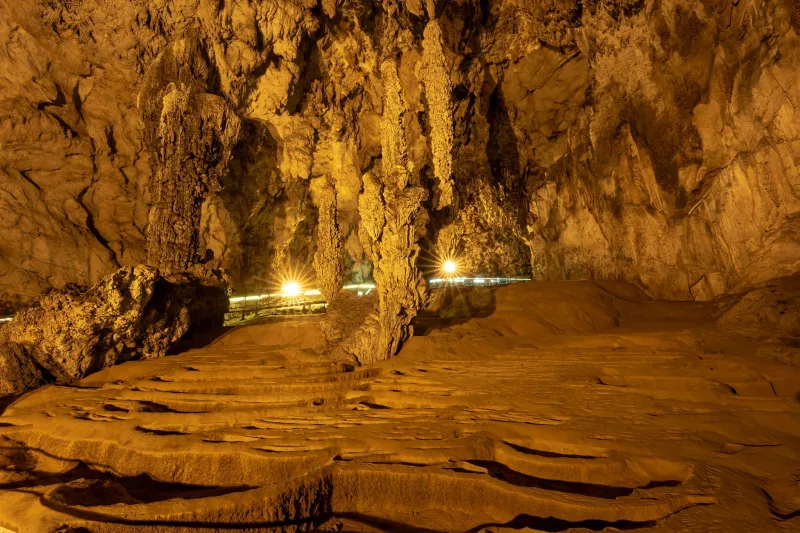
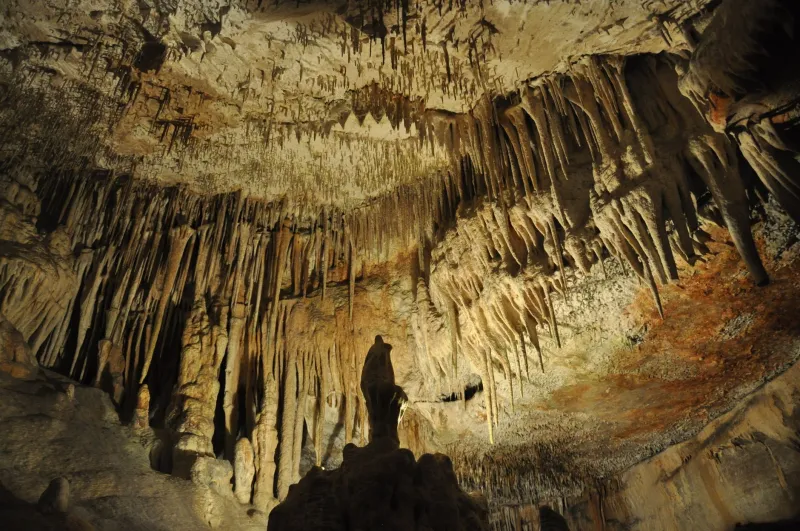
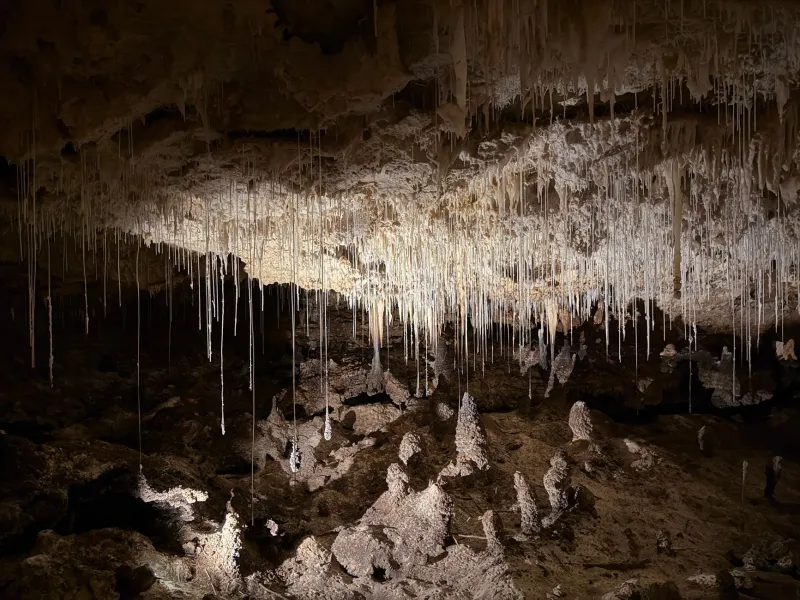
Trapped within the crystalline matrices of speleothems—the stalactites, stalagmites, flowstones, and other mineral formations that develop over millennia inside cave systems—are minute quantities of ancient air. These microscopic inclusions, sealed at the moment of mineral deposition, represent direct samples of the atmosphere as it existed when the surrounding calcite or aragonite crystallized. Extracting and interpreting them is technically demanding work, but the scientific payoff is extraordinary: a molecular record of past atmospheric composition that complements, and in certain respects surpasses, the information available from ice cores, ocean sediments, and tree rings.
Why Caves Preserve What Other Archives Cannot
The premier archive of ancient atmospheric gases has, for decades, been the polar ice core. By drilling into the Greenland and Antarctic ice sheets, researchers have recovered air bubbles trapped in compacted snow layers, yielding direct measurements of past carbon dioxide, methane, and nitrous oxide concentrations extending back approximately 800,000 years. The value of this record is immense. Its limitations, however, are equally significant.
Ice cores are geographically restricted to polar and high-alpine environments. They are vulnerable to diffusion—the gradual migration of gas molecules through the ice matrix over time, which can blur the boundaries between discrete atmospheric samples. And they provide relatively limited spatial resolution across the mid-latitudes, where the majority of human civilization has historically been concentrated and where many of the most consequential climate dynamics have unfolded.
Cave formations offer a different kind of archive. Speleothems are distributed across every continent and every climatic zone, including the temperate mid-latitudes of North America. They grow in environments of stable temperature and humidity that minimize post-depositional alteration of trapped materials. And the fluid inclusions within speleothem calcite—tiny droplets of ancient cave water and, crucially, the air that was dissolved within or mechanically trapped alongside that water—can preserve atmospheric signatures with a fidelity that is only beginning to be fully characterized.
In cave systems ranging from the karst formations of the Cumberland Plateau to the limestone caverns of the Edwards Plateau in Texas, researchers have identified speleothem samples with depositional ages extending well beyond the temporal range of the polar ice core record. The potential to recover atmospheric data from periods as remote as several million years ago—if suitable formations can be identified and analytical methods refined sufficiently—represents a genuinely transformative prospect for the earth sciences.
The Methodology of Extraction
Retrieving ancient air from a speleothem is not a simple undertaking. The quantities involved are vanishingly small. A single fluid inclusion may contain only nanoliters of ancient water and an associated gas phase measured in picoliters. Extracting this material without contamination from modern atmospheric gases, and then analyzing it with sufficient sensitivity to characterize its composition, requires instrumentation and protocols that have been developed and refined over the past two decades.
The most widely employed extraction approach involves carefully crushing or milling speleothem samples under vacuum conditions. As the calcite matrix is mechanically disrupted, fluid and gas inclusions are liberated and collected for analysis. The extracted gas is then introduced into mass spectrometers or laser-based spectroscopic instruments capable of measuring isotopic ratios and molecular concentrations at the parts-per-billion level.
A critical methodological challenge involves distinguishing between gas that was genuinely trapped at the time of mineral deposition and gas that entered the sample subsequently—either through diffusion during storage or through contamination during sample preparation. Researchers address this challenge through multiple approaches: rigorous sample handling protocols, analysis of gas isotope ratios that serve as contamination markers, and cross-validation against independent paleoclimate proxies derived from the same speleothem samples, such as oxygen and carbon isotope records that reflect past temperature and precipitation conditions.
Several American research groups, including teams affiliated with universities in Texas, New Mexico, and Kentucky, have made significant methodological contributions to this field. Their work has helped establish the analytical frameworks that are now enabling the first systematic surveys of trapped atmospheric gases in North American speleothems.
What the Air Is Saying
The scientific findings emerging from speleothem air inclusion research are already substantive, and in some cases surprising.
Measurements of carbon dioxide concentrations in inclusions from formations deposited during the last glacial maximum—approximately 20,000 years ago—are broadly consistent with ice core data, a finding that provides important cross-validation for both archives. More intriguing are results from samples deposited during interglacial periods and during the Holocene, the current geological epoch spanning the past 11,700 years. In several instances, speleothem-derived CO₂ measurements have captured short-duration atmospheric anomalies—rapid concentration spikes or drawdowns lasting decades to centuries—that are not clearly resolved in the ice core record, possibly because of the diffusion-related blurring mentioned above.
Volcanic events represent another area of active investigation. Major eruptions inject sulfur dioxide and other gases into the atmosphere in quantities sufficient to alter atmospheric chemistry on regional to global scales. Speleothem formations deposited in the years immediately following large eruptions may preserve geochemical signatures of these atmospheric perturbations. Identifying and interpreting these signatures is complex work, but early results suggest that cave formations may provide a means of extending the volcanic atmospheric record into time periods that predate reliable ice core coverage.
Perhaps most consequentially, researchers are beginning to use speleothem air inclusions to investigate the relationship between atmospheric methane concentrations and past climate transitions. Methane is a potent greenhouse gas whose atmospheric concentration has varied significantly across glacial-interglacial cycles. Understanding the mechanisms that drove those variations—and in particular, whether they were primarily driven by changes in wetland emissions, ocean methane hydrate dynamics, or other sources—is central to improving projections of future climate under warming scenarios.
Implications for Climate Science and Cave Conservation
The development of speleothem air inclusion analysis as a mainstream paleoclimate tool carries implications that extend well beyond the laboratory. It reinforces, with particular force, the scientific argument for the stringent protection of cave formations from physical disturbance.
Every stalactite broken, every flowstone surface abraded, every speleothem removed as a souvenir represents the irreversible destruction of an atmospheric archive that may be unique. Unlike many geological records, speleothems cannot be reconstituted or replicated. The air sealed within a formation deposited 50,000 years ago during a specific climatic interval is, in a very literal sense, the only surviving sample of that atmosphere. Its loss is permanent.
For cave researchers, conservationists, and land managers across the United States, this framing provides a compelling supplement to the aesthetic and ecological arguments for cave protection. These formations are not merely beautiful objects or biological habitats. They are scientific instruments of extraordinary sensitivity, assembled by geological processes over timescales that dwarf human history, and capable of answering questions about our planet's past—and future—that no other technology can address.
The air has been waiting, sealed in stone, for tens of thousands of years. The science to hear what it is saying has finally arrived.