Karst, Aquifers, and the Nation's Thirst: Why Cave Science Is Central to America's Water Security
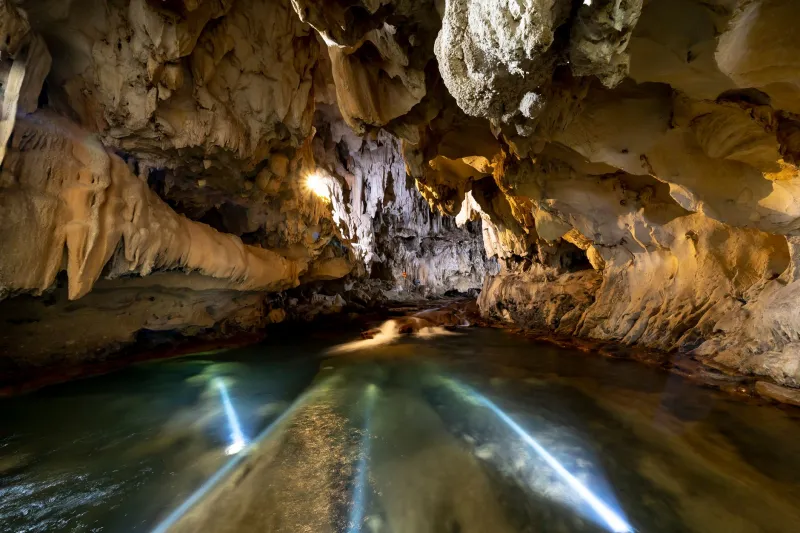
For most Americans, the concept of water scarcity conjures images of receding reservoir shorelines, cracked lakebeds, and mandatory lawn-watering restrictions. What rarely enters the public imagination is the possibility that the most consequential freshwater reserves in the country lie not on the surface at all, but thousands of feet underground — coursing through labyrinthine cave passages, pooling in vast subterranean chambers, and filtering slowly through porous limestone formations that took millions of years to develop.
America's karst regions — landscapes underlain by soluble bedrock such as limestone, dolomite, and gypsum — cover roughly 20 percent of the continental United States. Beneath these regions, networks of caves, conduits, and fractured rock form what hydrologists call karst aquifers: dynamic, highly productive groundwater systems that supply drinking water to an estimated 40 million people nationwide. As the pressures bearing down on surface water supplies continue to mount, the scientific community is increasingly looking downward for answers.
What Makes Karst Aquifers Different
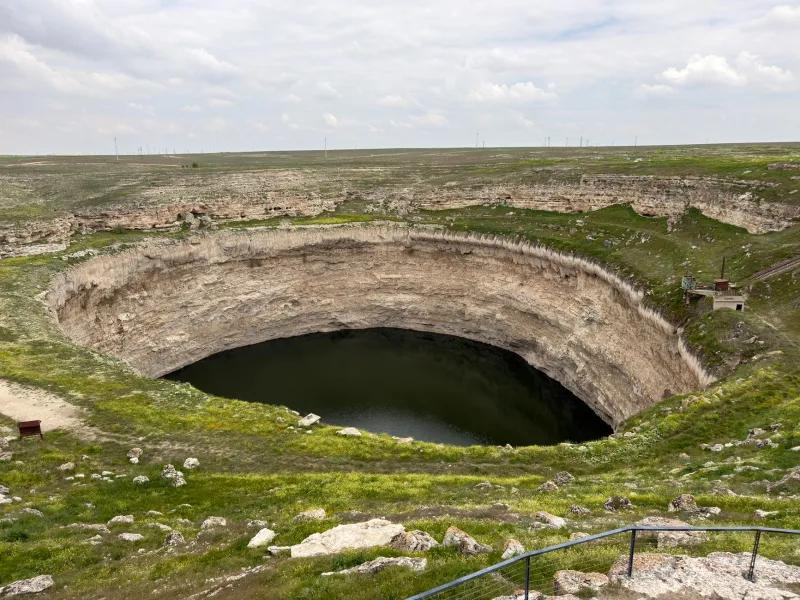
Not all groundwater behaves the same way. In conventional aquifers — those composed of sand, gravel, or porous rock — water moves slowly and predictably, filtering through fine-grained material over long distances. Karst aquifers operate by an entirely different logic. Because the underlying limestone has been dissolved over geological timescales by mildly acidic water, these systems contain discrete channels, sinkholes, and cave passages through which water can travel at remarkable speed — sometimes miles per day.
This characteristic makes karst aquifers extraordinarily productive. The Edwards Aquifer in central Texas, for instance, discharges millions of gallons of water per day through natural springs and serves as the primary drinking water source for the greater San Antonio metropolitan area, home to more than two million residents. Similar systems underlie the Ozarks of Missouri and Arkansas, the karst plains of Florida, and portions of the Appalachian highlands stretching through Tennessee, Kentucky, and Virginia.
However, the same porosity that makes these aquifers so productive also renders them acutely vulnerable. Unlike slower, more diffuse groundwater systems, karst aquifers offer relatively little natural filtration. A contaminant introduced at a sinkhole or surface drainage point can reach a municipal water supply within hours rather than years. This fundamental characteristic transforms cave research from an academic pursuit into a matter of public health.
The Edwards Aquifer: A Case Study in Complexity
Perhaps no karst system in the United States better illustrates both the promise and the peril of dependence on cave-fed groundwater than the Edwards Aquifer of south-central Texas. Stretching across roughly 3,000 square miles of the Texas Hill Country, the Edwards is a confined limestone aquifer that has sustained human settlement in the region for centuries. Today, it supports agriculture, industry, and urban growth across one of the fastest-expanding corridors in the nation.
The aquifer's recharge zone — the surface area through which rainwater percolates downward into the cave system — encompasses hundreds of square miles of Hill Country terrain. As that terrain has been developed, scientists with the Edwards Aquifer Authority and affiliated research institutions have worked to map the precise pathways through which surface water enters the system. Dye-tracing studies, in which non-toxic fluorescent compounds are introduced at sinkholes and tracked to spring outlets, have revealed a complex web of subterranean connections that defy simple modeling.
Drought compounds the challenge considerably. During extended dry periods, the aquifer's water levels drop, spring discharges diminish, and the delicate ecosystems that depend on those springs — including several federally listed endangered species found nowhere else on Earth — face severe stress. The blind Texas salamander and the fountain darter are among the cave-adapted species whose survival is directly tied to the aquifer's health. Their precarious existence serves as a biological indicator of the system's overall condition, a function that cave biologists have come to regard as scientifically irreplaceable.
The Science of Protecting What Cannot Be Seen
Managing a resource that is simultaneously invisible, interconnected, and irreplaceable presents challenges that conventional water management frameworks are ill-equipped to address. Cave researchers bring a distinctive set of tools and perspectives to this problem. Physical exploration of cave passages — conducted by trained cave divers in flooded conduit systems — provides direct observational data that remote sensing and surface-based drilling cannot replicate.
Groundwater tracing studies, combined with increasingly sophisticated hydrological modeling, allow scientists to construct predictive frameworks for how karst systems will respond to changes in recharge patterns, extraction rates, and land use. These models are particularly valuable for anticipating the consequences of prolonged drought, a scenario that is no longer hypothetical across much of the American Southwest and Southeast.
Geochemical analysis of cave waters offers another layer of insight. By examining the isotopic signatures of water sampled from deep within cave systems, researchers can determine the age of specific water parcels, trace their origin to particular rainfall events, and assess how quickly different portions of an aquifer respond to surface conditions. This information is essential for setting scientifically defensible extraction limits — limits that protect long-term aquifer health even as short-term demand continues to rise.
Balancing Access and Conservation
The tension between water extraction and aquifer preservation is not merely academic. In Texas, legal battles over Edwards Aquifer pumping rights have played out in federal courts for decades, pitting agricultural users against municipal utilities and environmental advocates. Similar conflicts are emerging in Florida, where the Floridan Aquifer system — one of the most productive in the world — faces mounting pressure from population growth and agricultural demand.
Cave researchers occupy an unusual position in these disputes. Their work generates the baseline data upon which regulatory decisions depend, yet the act of accessing cave systems for scientific purposes must itself be conducted with extraordinary care to avoid disturbing the very environments under study. Responsible cave exploration and water sampling protocols are therefore not merely procedural formalities; they are ethical commitments to the integrity of the science.
Public land managers, state environmental agencies, and water authorities have increasingly recognized the value of integrating speleological expertise into long-term water resource planning. Partnerships between cave research organizations and governmental bodies have expanded in recent years, reflecting a broader acknowledgment that sustainable groundwater management requires understanding the geological architecture of the systems being managed.
A Resource Hiding in Plain Sight
The irony of America's freshwater predicament is that the nation sits atop enormous subterranean reserves whose full extent and capacity remain incompletely mapped. Advances in ground-penetrating radar, satellite-based gravity measurement, and automated water-quality monitoring are beginning to change that picture, but significant gaps in knowledge persist — particularly in rural karst regions that have received less scientific attention than high-profile systems like the Edwards.
For the researchers who dedicate their careers to understanding these hidden environments, the urgency is palpable. Cave systems are not merely geological curiosities or recreational destinations; they are functioning infrastructure for one of the most essential resources on Earth. As the climate continues to shift and surface water supplies grow less dependable, the scientific community's capacity to characterize, monitor, and protect karst aquifers will become an increasingly critical component of national water security.
The darkness beneath our feet, it turns out, may hold some of the most important answers to the challenges unfolding in the light above.